
Everest View Trek: Short Trek to See Mount Everest – Complete Guide
14th Sep, 2026
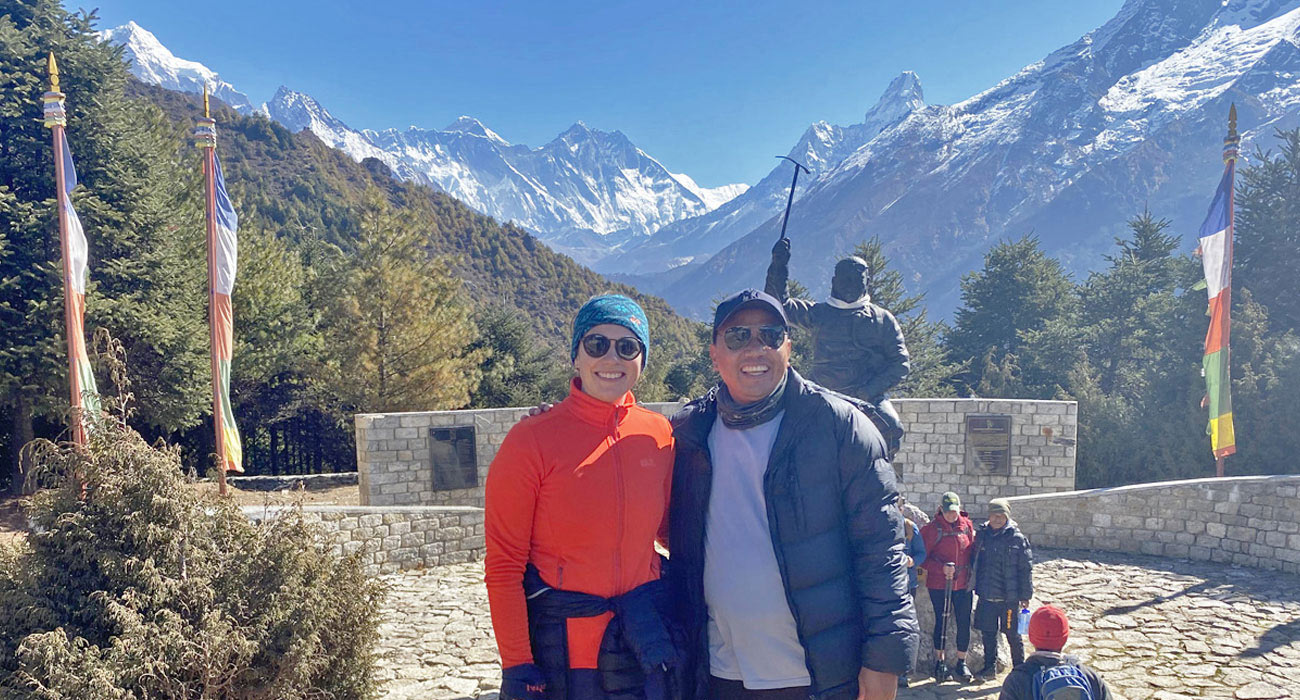
Not everyone has three weeks to spare, and not everyone wants to push through 5,000+ metres of altitude to feel the scale of the Himalayas. If that sounds like you, the Everest View Trek solves both problems at once: in about a week, you fly into Lukla, walk through the Khumbu's most iconic Sherpa villages, and stand face-to-face with Everest, Lhotse, Nuptse, and Ama Dablam — without ever needing to commit to a full Base Camp expedition.
Table of Contents
This guide covers everything you need to plan the trek: the real day-by-day itinerary, distances and altitudes, season-by-season advice, cost tiers, permits, and what to pack — plus where to book it.
👉 Full itinerary, pricing tiers, and booking: Everest View Trek – Mountain Eco Treks
What Is the Everest View Trek?
The Everest View Trek is one of the shortest and most accessible ways to see Mount Everest up close. Instead of trekking all the way to Base Camp, this route takes you as far as Namche Bazaar and the nearby Everest View Hotel viewpoint (around 3,880 m) — high enough for genuinely spectacular mountain panoramas, but without the extended time commitment, extreme altitude, or physical demands of the full Base Camp trek.
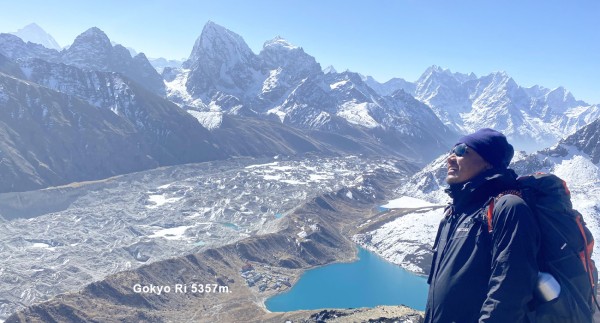
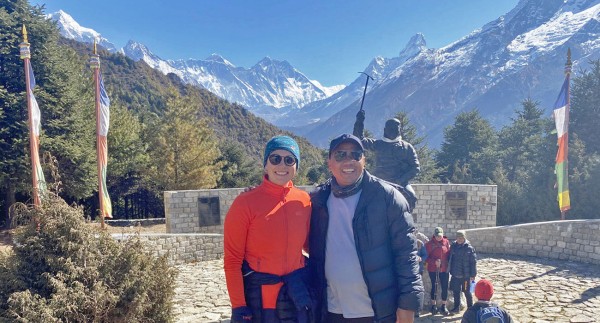
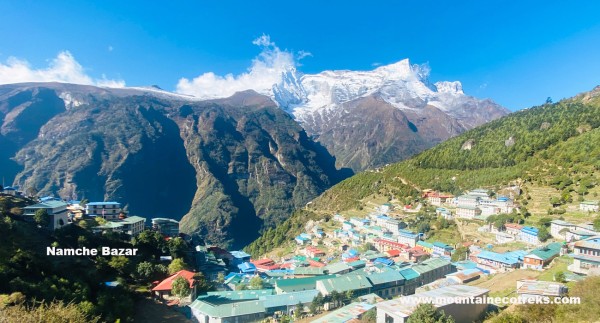
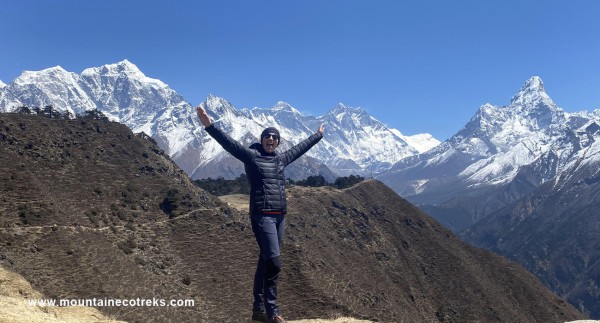
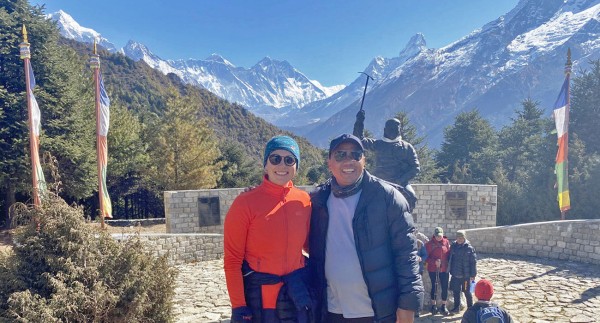
The journey begins with a scenic mountain flight to Lukla — regularly ranked among the most thrilling short flights in the world — followed by a gentle trail alongside the Dudh Koshi River, through pine and rhododendron forest, past mani walls and prayer flags, and into the UNESCO-listed Sagarmatha National Park. From there, the trail climbs to Namche Bazaar, the cultural and commercial capital of the Khumbu, where you'll have time to explore local markets, cafés, and a Sherpa museum before hiking up to a viewpoint for close-range views of Everest, Lhotse, Nuptse, and the strikingly sharp profile of Ama Dablam.
It's a trip built for people who want maximum Himalayan reward in a minimum amount of time — first-timers, families, school and university groups, and travelers on a tighter schedule who still want the real Everest experience.
Quick Trip Facts
| Detail | Information |
|---|---|
| Trip Duration | 7 Days (Kathmandu to Kathmandu) |
| Trip Grade | Moderate |
| Max Altitude | ~3,880–3,900 m (Everest View Hotel viewpoint) |
| Group Size | 2–15 people |
| Meals | Breakfast, Lunch & Dinner |
| Accommodation | Twin-share or single rooms (teahouse/hotel) |
| Transportation | Flight Kathmandu–Lukla–Kathmandu (direct or via Ramechhap) |
| Best Season | Year-round, best in spring and autumn |
| Wi-Fi | Available at most stops |
| Starting Price | From roughly US$1,055 per person (Budget tier) |
Who Is This Trek Suitable For?
This trek is designed to be approachable without losing the sense of adventure. It works especially well for:
- First-time trekkers who want a genuine taste of high-altitude trekking without a long commitment
- Families with older children looking for a shared adventure holiday
- School, college, or corporate groups wanting an educational or team-building trip
- Travelers on a tight schedule who still want to see Everest in person
- Photography enthusiasts chasing sunrise and sunset shots of Everest, Ama Dablam, and the Khumbu Valley
- Trekkers who want to test their fitness and altitude tolerance before committing to a longer trek like Everest Base Camp
Because the trail stays below 4,000 m and follows well-established paths, it's considerably gentler on the body than the full Base Camp route, while still delivering genuinely world-class mountain views.
Route, Distance & Altitude Table
| Trekking Route | Approx. Distance | Walking Time | Altitude |
|---|---|---|---|
| Lukla → Phakding | 8 km | 3–4 hours | 2,610 m |
| Phakding → Namche Bazaar | 10.5 km | 6–7 hours | 3,440 m |
| Namche → Everest View Hotel (round trip) | 5 km | 3 hours | 3,880 m |
| Namche → Lukla | 18.5 km | 6–7 hours | 2,860 m |
| Manthali/Ramechhap → Kathmandu (drive) | 130 km | 4–5 hours | 1,400 m |
Note: During the busy months of October, November, March, and April, direct Kathmandu–Lukla flights are frequently suspended in favor of the shorter Lukla–Ramechhap (Manthali) route, which requires an additional 4–5 hour road transfer at either end. This is standard practice across the whole Everest region during peak season, not a sign of anything going wrong with your trip.
This exact 7-day structure is the current published itinerary for the trek — see the full Everest View Trek itinerary page for day-by-day detail, live availability, and departure dates.
Best Season to Trek
| Season | Months | What to Expect |
|---|---|---|
| Spring | March – May | Mild temperatures, mostly clear skies, blooming rhododendron forests |
| Autumn | September – November | The most popular season — crisp air, excellent visibility, dry trails, local festivals |
| Winter | December – February | Quiet trails, snow-capped peaks, colder temperatures — great for solitude and photography |
| Monsoon | June – August | Lush green valleys and full rivers, but wet, slippery trails and reduced visibility |
Recommendation: Spring and autumn remain the gold-standard windows for the clearest mountain views and the most comfortable trekking conditions. That said, because this trek stays at a relatively modest altitude and moves quickly, it's genuinely doable year-round — winter rewards you with snow-covered scenery and near-empty trails, while even monsoon season has its own lush, quiet charm for more adventurous travelers.
Trek Difficulty
The Everest View Trek is graded moderate — approachable for most reasonably fit travelers, but not without genuine effort:
- Daily walking averages 5–6 hours, covering roughly 10–12 km per day
- The trail includes steep, rocky sections, particularly the climb into Namche Bazaar
- The maximum altitude of around 3,880 m is high enough that altitude sickness is a real possibility, so a sensible pace and proper acclimatization matter
- One full acclimatization day is built into the itinerary in Namche Bazaar
- No technical climbing or specialist mountaineering skills are required — this is a walking trek suited to trekkers with at least some hiking background
- A reasonable base level of cardiovascular fitness, built up with regular walking or hill training beforehand, will make the trip considerably more enjoyable
Cost & Package Options
One of the most useful things about this trek is that it's offered in three clearly defined service tiers, so you can match the trip to your budget and comfort preferences.
| Package | Starting Price (per person) | Best For |
|---|---|---|
| Budget | From US$1,055 | Value-focused trekkers who want the full experience without extras |
| Standard | From US$1,195 | Trekkers who want a comfortable balance of comfort and value |
| Luxury | From US$3,295 | Travelers who want helicopter flights, 5-star Kathmandu hotels, and premium mountain lodges |
Quick comparison of what changes between tiers:
| Feature | Budget | Standard | Luxury |
|---|---|---|---|
| Kathmandu hotel | Not included | 3-star, 2 nights | 5-star, 2 nights |
| Lukla flights | Included (direct/via Ramechhap) | Included (direct/via Ramechhap) | Round-trip helicopter |
| Trek accommodation | Teahouse | Teahouse (comfortable) | Premium mountain lodge |
| Porter | On request, extra cost | 1 per 2 trekkers | 1 per 2 trekkers |
| Sleeping bag / down jacket | Not included | Complimentary | Complimentary, returnable |
| SIM card | Not included | Free local SIM | Free local SIM |
| Extras | Basic first-aid kit | Oximeter, first-aid, farewell dinner | Assistant guides, welcome & farewell dinners, trip certificate |
For exact current pricing, seasonal offers, and to compare the tiers in full detail, check the live rates on the Everest View Trek booking page.
What's Typically Included and Excluded
✅ Generally Included (all tiers)
- Airport pickup and drop-off
- Kathmandu–Lukla–Kathmandu flights (direct or via Ramechhap depending on season)
- Meals during the trek (breakfast, lunch, dinner)
- Teahouse or lodge accommodation on the trail
- Licensed trekking guide
- All required trekking permits and national park entry fees
- Government taxes and local fees
- Basic first-aid support and emergency assistance coordination
- Trek completion certificate
- Farewell cultural dinner in Kathmandu
❌ Generally Excluded (all tiers)
- International airfare and Nepal visa fee
- Lunch and dinner in Kathmandu
- Tea, coffee, alcohol, and bottled water beyond what's specified
- Wi-Fi, hot showers, battery charging, and laundry (available for a small fee on the trail)
- Personal travel and high-altitude rescue insurance
- Personal trekking gear and clothing
- Tips for guides and porters
Note: Exact inclusions vary between the Budget, Standard, and Luxury tiers — porter service, sleeping bags, and helicopter flights, in particular, differ significantly by package.
Permits Required for Everest View Trek
Two main permits cover this trek, both of which are arranged by your trekking operator:
- TIMS Card (Trekkers' Information Management System) — requires two passport photos and is checked at trail checkpoints
- Sagarmatha National Park Entry Permit — required since the trail passes through this UNESCO World Heritage-listed park
Make sure your booking confirms both are included in the package price, as they are with the Everest View Trek.
Packing Checklist for Everest View Trek
Documents & Money
- Passport, visa, travel insurance details, and passport photos
- Cash and a credit/debit card (Visa/Mastercard)
Clothing
- Down jacket and down sleeping bag
- 3–4 T-shirts and a fleece jacket or pullover
- Lightweight long trousers and undergarments
- Warm hat, buff/scarf, and gloves (wool or fleece)
- 3–4 pairs of thick wool-blend socks plus thin liner socks
- Comfortable, broken-in walking shoes and sandals for evenings
Gear & Accessories
- Daypack (10–15 kg capacity)
- Headlamp/flashlight with spare batteries
- Trekking/walking pole
- Refillable water bottle and water purification tablets
- Sunglasses and snow goggles with UV protection
- Basic first-aid kit (painkillers, blister care, altitude medication if prescribed, personal medications)
- Toiletries: quick-dry towel, toothbrush, biodegradable soap, wet wipes, hand sanitizer
- Sewing kit, sunscreen, and lip balm
Electronics
- Camera with spare batteries
- Power bank and charging cables
- Universal/2-pin adapter
Snacks
- Energy bars and energy drinks for the trail
Frequently Asked Questions
1. How hard is the Everest View Trek?
It's rated moderate. The trail includes steep, rocky sections, and the altitude (up to roughly 3,880 m) can make breathing noticeably harder, so a good baseline fitness level and sensible pacing matter, even though the trip is well short of Base Camp altitudes.
2. How many hours will I walk each day?
Typically 5–6 hours, covering 10–12 km per day, with one lighter acclimatization day built in around Namche Bazaar.
3. What kind of plane flies to Lukla?
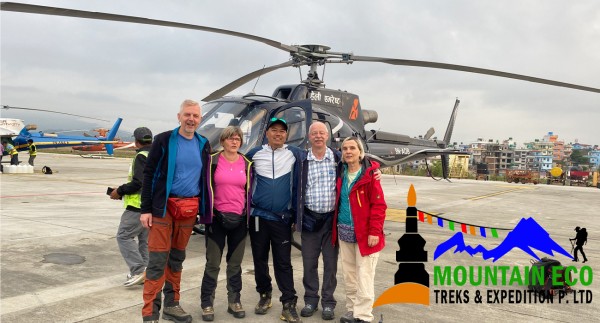
Only small fixed-wing STOL aircraft (carrying roughly 16–18 passengers) and helicopters (around 5 passengers) are permitted to land at Lukla's short mountain airstrip.
4. Is there a baggage limit on the Lukla flight?
Yes — airlines generally allow 15 kg total (check-in plus hand luggage) per passenger, with a small additional charge available for a few extra kilos in genuine emergencies.
5. Do I need previous trekking experience?
Given the altitude reached (around 3,880 m), some prior hiking or trekking experience is recommended, though absolute beginners with reasonable fitness do complete this trek successfully.
6. Is the trail crowded?
Yes, especially during spring (March–May) and autumn (September–November), the two most popular trekking seasons. Winter and monsoon months are much quieter, though facilities remain available year-round.
7. What food is available on the trek?
Teahouse menus are varied and freshly prepared: oats, Tibetan bread, and eggs for breakfast; dal bhat, Sherpa stew, momos, noodles, pasta, and pizza for lunch and dinner. Vegan and vegetarian options are widely available.
8. Is Wi-Fi and phone charging available?
Wi-Fi is available at most teahouses along the route. Charging is possible but limited and comes at an extra cost, since electricity in the region is generated locally rather than drawn from a national grid — a power bank is a smart backup.
9. What's the accommodation like?
Teahouses and lodges of varying comfort levels, from simple rooms with shared bathrooms to more comfortable options with attached bathrooms, depending on which package tier you book.
10. Do I need travel insurance?
Yes — comprehensive travel insurance covering high-altitude trekking and emergency evacuation is strongly recommended (and required by most operators) to cover any unexpected medical or logistical costs.
11. Is laundry available on the trek?
Only in Namche Bazaar. Elsewhere, you'll need to hand-wash items yourself, so packing an extra set of clothing is a good idea.
12. Should I tip my guide and porter?
Tipping is customary rather than mandatory, and the amount is entirely at your discretion based on the service you received.
13. Can I combine this trek with a longer Everest itinerary?
Yes — many trekkers pair a shorter trip like this with a longer route later, or upgrade directly to something like the Everest Base Camp Trek with Helicopter Return if they want to go all the way to Base Camp on a future trip.
Final Thoughts: Is the Everest View Trek Right for You?
If you want to see Mount Everest with your own eyes but don't have the time, budget, or appetite for a full three-week Base Camp expedition, the Everest View Trek delivers an outsized reward for a modest time investment. In just seven days, you get the thrilling Lukla flight, the cultural heart of Namche Bazaar, close-up views of Everest and Ama Dablam, and a genuine sense of what makes the Khumbu region so legendary — all without pushing your body to extreme altitude.
It's an ideal first step into Himalayan trekking, a smart choice for families and groups, and a satisfying trip in its own right even for experienced trekkers who are simply short on time.
Ready to book your trip? Compare the Budget, Standard, and Luxury packages, check live departure dates, and reserve your spot here:
👉 Everest View Trek – Mountain Eco Treks
This guide is intended for general trip-planning purposes. Prices, permits, flight routing, and trail conditions can change — always confirm current details directly with your trekking operator before booking.
Recent From Blog

19th Apr, 2019


23rd Dec, 2018

11th Jan, 2024

14th Jan, 2024

29th Jan, 2025

11th Feb, 2025

18th Feb, 2025

25th Feb, 2025

5th Apr, 2025
23rd Dec, 2025
9th May, 2026
12th Jul, 2026

13th Aug, 2026
13th Aug, 2026
13th Aug, 2026

16th Aug, 2026
20th Aug, 2026