
Mera Peak Climbing: Complete Guide, Itinerary, Cost & Permits
20th Sep, 2026
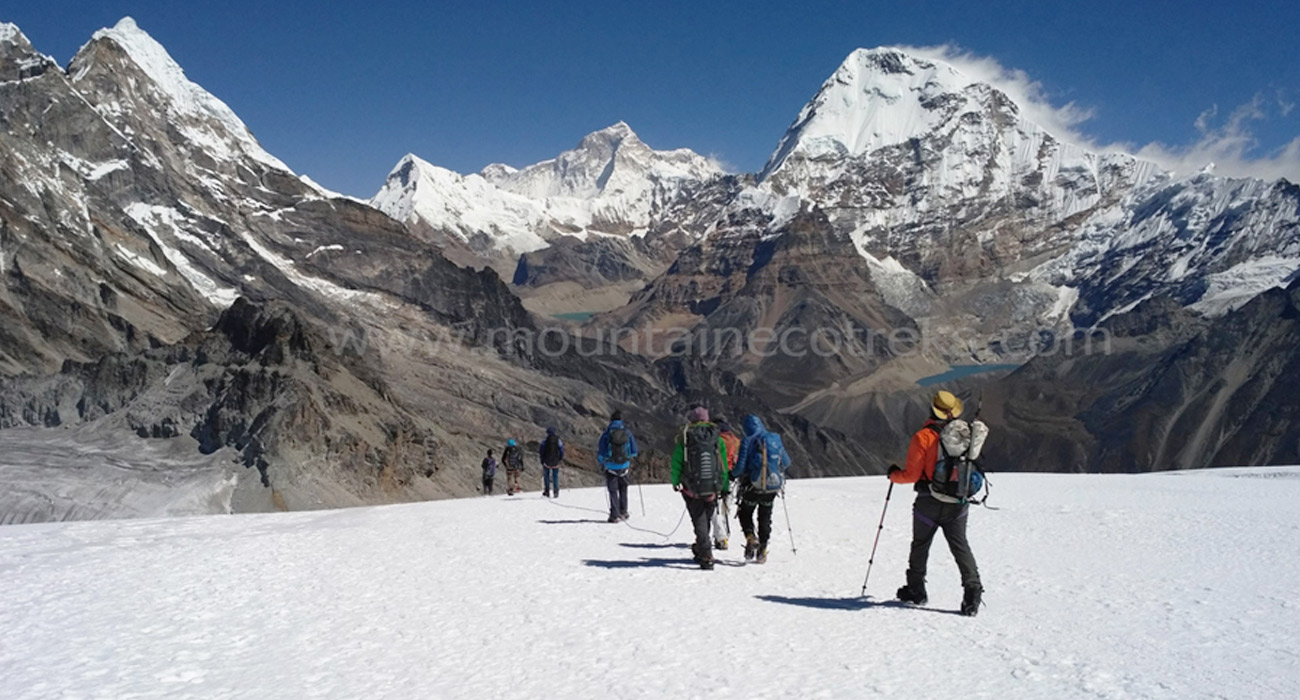
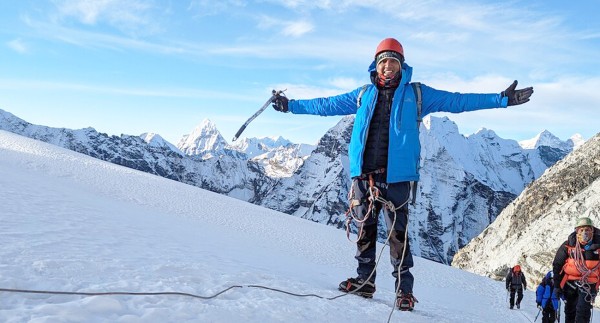
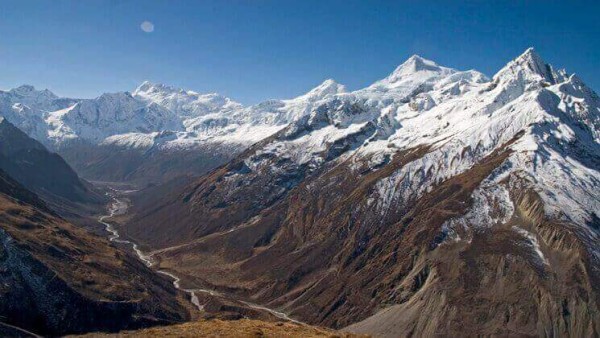
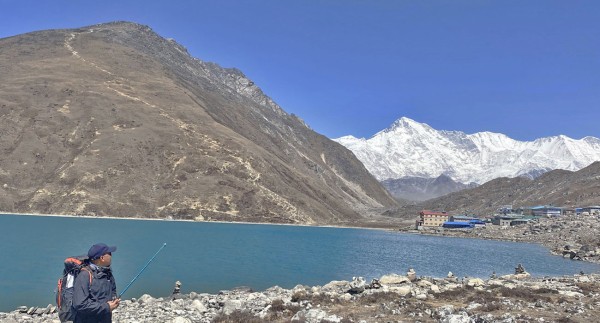
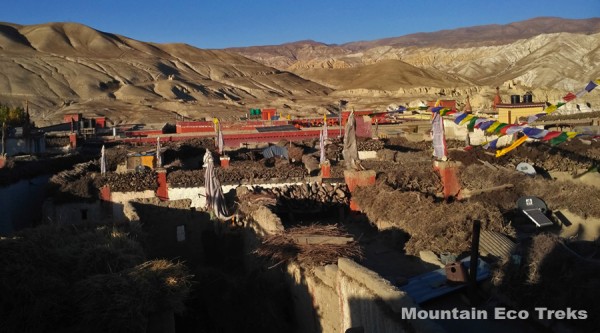
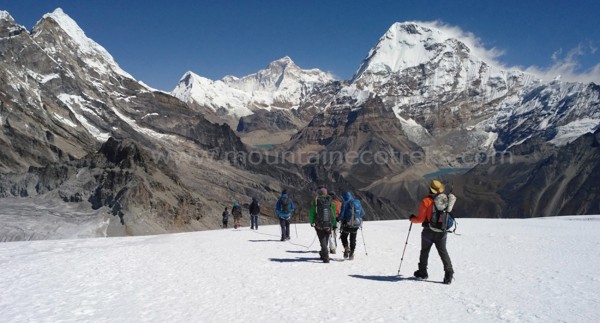
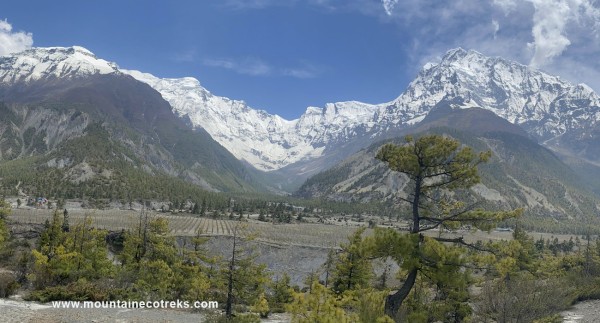
Mera Peak rises to 6,476 m (21,247 ft) in the remote Hinku Valley, east of the Khumbu region and close to Baruntse and Makalu. Unlike the busy Everest Base Camp trail, the route to Mera is quiet and wild. Over the first days you walk through rhododendron and pine forest, cross high passes, pass old monasteries and herders' settlements, and slowly climb into a world of glaciers, moraines and snow. Many climbers say the journey through the Hinku Valley is as memorable as the summit itself.
Table of Contents
The climb is graded PD (Peu Difficile) on the alpine scale, which means the route is non-technical. You will not face steep rock walls or vertical ice. Instead, you walk on glacier slopes, cross a few crevasses with a rope, and follow a final snow slope to the top. This is why Mera suits first-time Himalayan climbers, and why experienced mountaineers also use it as an acclimatization objective before bigger expeditions. That said, "non-technical" does not mean "easy." The real challenge is altitude, cold and endurance, especially on summit day, when you set out around 1 or 2 a.m. and can be moving for 12 hours or more.
Success on Mera depends less on climbing skill than on preparation. Steady acclimatization, good fitness, the right gear and a strong local team matter far more than previous mountaineering experience. That is why our 15-day itinerary includes an acclimatization and skills-training day at Khare (5,045 m), where your guides check your equipment and teach you how to use crampons, ice axe and rope before you move up to Base Camp and High Camp.
You also need to plan ahead for practical details. Foreign climbers must obtain an NMA climbing permit through a registered agency, along with national park and local municipality permits. The best climbing seasons are spring (March to May) and autumn (September to November), when weather is most stable and the views are clearest. Costs vary with season, group size and the level of service, so it helps to know what a package includes before you compare options.
Whether you are dreaming of your first 6,000 m peak or planning a step toward a bigger objective, this guide will help you decide if Mera Peak is right for you and how to prepare for it. Read on for the full breakdown, and if you have questions along the way, our team is always happy to help.
Quick Facts About Mera Peak
| Detail | Information |
|---|---|
| Peak height | 6,476 m (21,247 ft). Older sources list 6,461 m. |
| Region | Hinku Valley, east of the Khumbu (Everest) region, Nepal |
| Grade | PD (Peu Difficile), a non-technical glacier climb |
| Trip length | 15 days (from arrival in Kathmandu to departure) |
| Start and end point | Kathmandu, with flights to and from Lukla |
| Best seasons | March to May and September to November |
| Accommodation | Hotels in Kathmandu, teahouse lodges on the trek, tents at Mera Base Camp and High Camp |
| Group size | 1 to 15 climbers |
| Permits | NMA climbing permit, Makalu Barun National Park permit, local municipality permit |
Why Climb Mera Peak?
- A summit for first-timers. The climb is a glacier walk with moderate slopes and crevasse crossings, not a technical rock or ice route.
- Views that rival Everest itself. The panorama from the top is one of the widest in Nepal.
- Quiet trails. You approach through the remote Hinku Valley instead of the busy Everest Base Camp trail, through rhododendron forest, herder settlements and old Buddhist monasteries.
- A stepping stone. Many climbers use Mera as preparation for Island Peak, Lobuche or larger expeditions. If you want to compare, see our Island Peak Climbing and Lobuche Peak Climbing trips.
Mera Peak Climbing Itinerary
| Day | Route | Altitude | Stay |
|---|---|---|---|
| 1 | Arrive in Kathmandu, transfer to hotel and trip briefing | 1,400 m | Hotel |
| 2 | Fly to Lukla (about 30 min), trek to Chutanga | 3,420 m | Lodge |
| 3 | Cross Zatrwa La Pass (4,610 m) into Hinku Valley, trek to Thuli Kharka | 4,300 m | Lodge |
| 4 | Trek to Kothe through forest and over suspension bridges | 3,691 m | Lodge |
| 5 | Trek to Thangnak via Gondishung and Lungsumba Gompa | 4,325 m | Lodge |
| 6 | Trek to Khare, with views of the Mera north face | 5,045 m | Lodge |
| 7 | Acclimatization and gear check, with crampon and rope training | 5,045 m | Lodge |
| 8 | Climb to Mera Base Camp via Mera La | 5,300 m | Camp |
| 9 | Ascend to Mera High Camp | 5,700 m | Tent |
| 10 | Summit day (6,476 m), descend to Khare | 5,045 m | Lodge |
| 11 | Descend to Kothe | 3,691 m | Lodge |
| 12 | Trek to Thuli Kharka | 4,320 m | Lodge |
| 13 | Cross Zatrwa La and trek back to Lukla | 2,845 m | Lodge |
| 14 | Fly to Kathmandu, celebrate your summit | 1,400 m | Hotel |
| 15 | Final departure | – | – |
Mera Peak Climbing Detail Itinerary
Day 1: Arrival in Kathmandu and Transfer to Hotel
Altitude: 1,400 m | Accommodation: Hotel
Our representative meets you at Tribhuvan International Airport and drives you to your hotel in Kathmandu. After you freshen up, your trip leader gives you a detailed briefing on the trek and climb: the route, the daily schedule, altitude safety, permits and gear.
This is a good time to check your equipment. If you are missing anything, such as a sleeping bag, down jacket or gloves, you can buy or hire it in Thamel today or tomorrow morning. The evening is free to rest and adjust to the time zone.
Day 2: Fly to Lukla (2,820 m) and Trek to Chutanga (3,420 m)
Flight: about 30 minutes | Trek time: about 4 hours | Meals: Breakfast, lunch, dinner | Accommodation: Lodge
You take an early scenic flight from Kathmandu to Lukla, with views of the Himalayan chain, including Everest on clear days. Lukla's short, sloping airstrip is one of the most famous in the world. At Lukla you meet your porters and crew, then set off.
Instead of following the busy Everest Base Camp trail, you head east, away from the main trekking route, and climb steadily through quiet villages and alpine forest of pine, oak, fir and rhododendron. Your stop for the night is Chutanga, a small seasonal herders' settlement in the forest. The walk is short, which lets your body start adjusting to altitude.
Day 3: Trek to Thuli Kharka (4,300 m)
Trek time: about 6–7 hours | Meals: Breakfast, lunch, dinner | Accommodation: Lodge
Today is a real climb. After breakfast you ascend steeply uphill and cross the Kalo Khola Ridge, traversing boulder-strewn slopes. You then reach Zatrwa La Pass (4,610 m), which marks the border between Sagarmatha National Park and Makalu Barun National Park.
From the pass you get your first view into the Hinku Valley, with green hills below and peaks such as Kongde Ri, Numbur and Lumding Himal on the horizon. A long, straight trail then leads down to Thuli Kharka for the night. Because this is a big altitude gain, walk slowly, drink plenty of water and tell your guide about any headaches or nausea.
Day 4: Trek to Kothe (3,691 m)
Trek time: about 6–7 hours | Meals: Breakfast, lunch, dinner | Accommodation: Lodge
Today's trail is long and rolls up and down, so we leave early after a light breakfast. From Thuli Kharka the path crosses big boulders and undulating ground, with a fine viewpoint of Mera Peak and other snow-capped mountains below Tashi Dingma.
The trail then drops steeply to Tashing Ongma and crosses two suspension bridges over the Hinku River. Finally you climb from Mosom Kharka into Kothe. Although you lose altitude today, the effort is real, and sleeping lower helps recovery before the next ascent.
Day 5: Trek to Thangnak (4,325 m)
Trek time: about 3–4 hours | Meals: Breakfast, lunch, dinner | Accommodation: Lodge
You follow the Hinku River uphill, passing the summer herders' settlement of Gondishung. Nearby is Lungsumba Gompa, a monastery believed to be about 200 years old, and a large mani stone carved with an inscription about the Mera Peak route.
The trail continues up to Thangnak, another summer pastureland village. The walking day is short, so you arrive with time to rest, hydrate and enjoy the views of the peaks around you.
Day 6: Trek to Khare (5,045 m)
Trek time: about 3–4 hours | Meals: Breakfast, lunch, dinner | Accommodation: Lodge
The path runs alongside the Sabai Tsho glacial lake and gains height steadily, with views of the Nuptse and Nuptse Shar glaciers. There is a sandy stretch followed by a steeper climb before you reach Khare.
Khare is your gateway to the mountain. From here you see the dramatic north face of Mera Peak for the first time. This is the highest point you sleep at so far, so pay close attention to how you feel tonight.
Day 7: Acclimatization and Preparation Day at Khare
Altitude: 5,045 m | Meals: Breakfast, lunch, dinner | Accommodation: Lodge
This is a rest day with a purpose. You spend it on:
- Acclimatization: a short, easy hike higher and back down to Khare, which helps your body adapt (climb high, sleep low).
- Skills training: your guides teach you how to use crampons, ice axe, harness, ascender and rope, and how to move safely on glacier terrain.
- Gear check: boots, harnesses, helmets, ropes and other equipment are inspected before the climb.
- Summit briefing: your guides explain the route, summit-day timing, safety procedures and turnaround rules.
If any of your gear is missing or uncomfortable, tell your guide today, because it is your last chance to fix it.
Day 8: Trek to Mera Base Camp (5,300 m)
Trek time: about 3–4 hours | Meals: Breakfast, lunch, dinner | Accommodation: Tent
Rested and better acclimatized, you leave Khare and climb steeply to the Mera Glacier, then cross Mera La Pass to reach Mera Base Camp. The terrain becomes more rugged and the views of glaciers and sharp peaks become more dramatic.
At Base Camp your crew sets up tents, and our kitchen team cooks hot meals. The night is cold, so use your down sleeping bag and eat and drink well.
Day 9: Climb to Mera High Camp (5,700 m)
Climb time: about 3–4 hours | Meals: Breakfast, lunch, dinner | Accommodation: Tent
This is one of the most demanding trail sections of the expedition. You cross a snow-covered, steep and rocky path with a few crevasses, roped up where needed, to reach the high camp beside a cairn.
From High Camp the panorama opens up: Everest, Makalu, Cho Oyu, Baruntse, Kangchenjunga and Kusum Kanguru. After setting up tents, you rest, eat, hydrate and prepare your gear for the night. Your guides give a final summit briefing and motivation before an early bedtime.
Day 10: Summit Mera Peak (6,476 m) and Descend to Khare (5,045 m)
Total time: about 12–14 hours | Meals: Breakfast, lunch, dinner | Accommodation: Lodge or tent at Khare
This is the day the whole trip has been building toward. You wake around midnight, eat breakfast and set off between 1 and 2 a.m., wearing headlamp, crampons and harness. Starting early matters, because afternoon weather can bring snow, wind and low visibility.
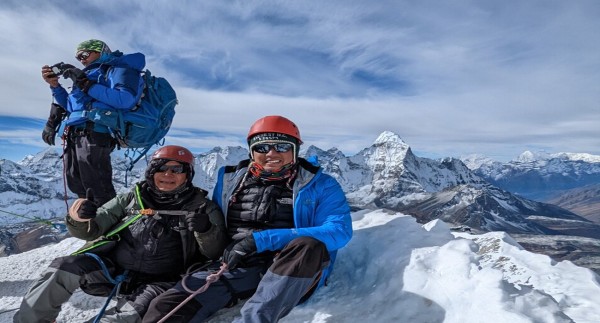
The route climbs across glacier slopes and crevasse zones, then up the final snow slope to the summit. From the top you are rewarded with views of Everest, Lhotse, Makalu, Cho Oyu and Kangchenjunga. Take photos, celebrate briefly and head down before noon.
After the summit you descend to High Camp, collect your gear, then continue down to Khare for the night. If you or the group are tired, or conditions are poor, your guide may decide to stay at High Camp or Base Camp instead, and that decision is final.
Tip: Save energy for the descent. Many accidents in the mountains happen on the way down, when people are tired and less alert.
Day 11: Trek to Kothe (3,691 m)
Trek time: about 6–7 hours | Meals: Breakfast, lunch, dinner | Accommodation: Lodge or tent
With the summit behind you, you head down the Hinku Valley, retracing the path past Thangnak and Gondishung. As the altitude drops, the air thickens, and most people feel stronger and sleep better. You reach Kothe in the afternoon and can rest, wash up and share stories with your team.
Day 12: Trek to Thuli Kharka (4,320 m)
Trek time: about 5–6 hours | Meals: Breakfast, lunch, dinner | Accommodation: Tea house
After breakfast you follow the downhill trail to Tashing Ongma, cross the suspension bridges over the Hinku Khola and its tributaries, then climb steeply again to Thuli Kharka over rocky boulders.
At Thuli Kharka the views back toward Mera North, Mera Central and Mera South are a fitting farewell to the peak you just climbed.
Day 13: Trek to Lukla (2,845 m)
Trek time: about 6–7 hours | Meals: Breakfast, lunch, dinner | Accommodation: Lodge
Today you climb back up to Zatrwa La Pass, then leave the Hinku Valley and re-enter the Khumbu. On a clear day you can see Cho Oyu, Kongde Ri, Numbur and Lumding Himal one more time.
After crossing the pass, the trail descends steeply through Chutanga, pastureland, small hamlets and dense rhododendron forest below the Kalo Khola Ridge to reach Lukla. Tonight is for celebrating your success with your guides and porters, so it is also a good time to hand out any tips.
Day 14: Fly Back to Kathmandu
Flight: about 30 minutes | Meals: Breakfast, lunch, dinner | Accommodation: Hotel
After breakfast you transfer to Lukla airport and board a small twin-engine plane back to Kathmandu. The rest of the day is free for a hot shower, a proper meal, shopping in Thamel or sightseeing.
Important: Lukla flights are weather-dependent. We strongly suggest keeping a buffer day or two before your international flight.
Day 15: International Departure
Meals: Breakfast
We transfer you to Tribhuvan International Airport, three hours before your flight. You leave Nepal with a Himalayan summit, new friends and memories that will last.
Highlights Along the Way
1. Zatrwa La Pass. This pass marks the boundary between Sagarmatha and Makalu Barun National Parks and opens the first big views of Hinku Valley.
2. Kothe to Thangnak. You pass ancient mani stones and Lungsumba Gompa, a monastery said to be about 200 years old.
3. Khare. This is your acclimatization base, and the day here is when you rehearse ropes, harness use and crampon technique.
4. Summit push. Climbers usually leave High Camp between 1 and 2 a.m. so they reach the top and descend before afternoon winds and cloud build up.
Mera Peak Permits: What You Need
Every foreign climber needs three permits, and you cannot apply for the climbing permit yourself. It must go through a government-registered agency.
1. Nepal Mountaineering Association (NMA) climbing permit. Following a fee revision, the permit is now around USD 350 per person in spring (March to May) and about USD 175 in autumn, winter and summer, up from the previous USD 250 and USD 125.
2. Makalu Barun National Park entry permit. This costs NPR 3,000 (about USD 25) for foreigners and is required because the Mera route passes through this park.
3. Local municipality permit. The Khumbu Pasang Lhamu Rural Municipality permit costs NPR 2,000 (about USD 18).
Mera is approached via the Hinku Valley, so a TIMS card is not typically required on this route. Fees are revised from time to time, so confirm the current figures with your agency before you pay. At Mountain Eco Treks, all necessary paperwork and permits are handled for you and included in the trip cost.
Some operators also mention a refundable garbage deposit. The NMA requires a garbage deposit of USD 250 to 500 per expedition, refundable when you bring your rubbish back down.
Mera Peak Climbing Cost
The final price depends on group size, season, accommodation standard and how much equipment you need to hire. As a general market guide, guided agency expeditions cost between USD 2,000 and 3,500, covering permits, meals, accommodation, domestic flights and guide support, while some budget packages start closer to USD 1,500. For our current rates, check the Mera Peak Climbing trip page or send an enquiry.
What's Included in Our Package
- Airport and hotel transfers by private vehicle
- Two nights in a Kathmandu hotel on bed and breakfast, plus a farewell dinner
- Domestic flights Kathmandu–Lukla–Kathmandu
- Breakfast, lunch and dinner during the trek, with hot drinks
- Lodge and tent accommodation on the mountain
- A government-registered English-speaking trekking guide and a licensed climbing Sherpa
- Porters (one porter per two trekkers)
- All permits, including the Mera Peak climbing permit, plus government and local taxes
- Personal climbing gear: ice axe, crampons, harness, helmet, ascender, descender, plastic mountaineering boots, carabiners and slings
- Group climbing gear: rope, snow bar, ice hammer and ice screws
- Medical kit
What's Not Included
- Lunch and dinner in Kathmandu
- Bottled drinks, hot showers, Wi-Fi and charging
- Travel insurance and emergency evacuation
- Tips for guides and porters
Budget tip: allow roughly USD 100 to 150 for personal spending and tips beyond the package, and buy insurance that explicitly covers climbing above 6,000 m and helicopter evacuation. Standard trekking insurance often does not.
How Difficult Is Mera Peak?
Mera is technically easy for a 6,000 m peak, but it is physically demanding because of altitude and long days.
- Altitude is the main challenge. You spend several nights above 4,000 m and two above 5,000 m, and summit day starts at about 5,700 m.
- Summit day is long. Expect roughly 8 to 12 hours of climbing and descending, starting in the dark and the cold.
- Technical elements are limited. Expect glacier walking, roped travel, a few crevasses and a final snow slope, all led by your climbing Sherpa.
- Remote terrain. Facilities are basic and there is little phone or internet coverage in the Hinku Valley.
How to Prepare
1. Start cardio training (running, cycling, stair climbing) at least 8 to 12 weeks before departure.
2. Add strength work for legs and core, and practice hiking with a loaded pack.
3. Do long weekend hikes in the boots you'll use.
4. Learn the basics of crampon and ice axe use. Our guides also teach this on the Khare acclimatization day.
5. Consult your doctor about high-altitude medication and any health conditions.
Best Time to Climb Mera Peak
| Season | Months | What to expect |
|---|---|---|
| Spring | March to May | Stable weather, flowering rhododendrons, warmer temperatures, higher permit fee |
| Autumn | September to November | Crisp, clear skies and excellent views, cold nights, lower permit fee |
| Winter | December to February | Very cold, heavy snow, fewer teahouses open |
| Summer/Monsoon | June to August | Rain, cloud and poor visibility |
October and November offer some of the clearest mountain views of the year, and March to May is the most popular window overall.
Essential Gear Checklist
Technical gear is included in our package, but you'll need your own clothing and personal items.
- Clothing: down jacket, windproof jacket and trousers, fleece, thermal layers, insulated gloves plus liner gloves, warm hat, balaclava or buff, and thick wool socks
- Sleeping: a down sleeping bag rated for extreme cold, with an inner liner
- Eyes and sun: glacier glasses or goggles with UV protection, sunscreen and lip balm
- Daypack and trekking poles
- Headlamp with spare batteries, which is critical for the pre-dawn summit start
- Hydration: water bottles and purification tablets
- Personal first aid: blister care, pain relief, rehydration salts, and any prescription medication
- Documents: passport, visa, insurance papers and passport photos
Altitude and Safety Tips
- Climb slowly and drink plenty of water, at least 3 to 4 litres a day.
- Never ignore headaches, nausea or dizziness. Tell your guide immediately.
- Trust your guide's turnaround time on summit day, especially if the weather changes.
- Keep a buffer day in your schedule for flight delays at Lukla, which are common in the mountains.
Mera Peak Climbing: FAQs
1. How difficult is Mera Peak, and is it suitable for beginners?
Mera Peak is graded PD (Peu Difficile) on the alpine scale, so it is a straightforward, non-technical climb. There are no vertical rock or ice walls. The route follows glacier slopes with a few crevasses and a final snow slope to the summit.
The difficulty comes from altitude and endurance, not technique. You spend several nights above 4,000 m, two above 5,000 m, and summit day means 8 to 12 hours of movement in cold, thin air. Beginners with good fitness, some trekking experience and a willingness to learn basic crampon and rope skills can succeed. Our guides teach these skills during the acclimatization day at Khare.
2. How high is Mera Peak?
The current official height is 6,476 m (21,247 ft). Many older guidebooks and websites list 6,461 m, so you may see both figures. Mera has three summits (North, Central and South), and the Central summit is the one most trekking groups climb. It is the highest of Nepal's officially listed trekking peaks.
3. How many days does the Mera Peak climb take?
Our standard itinerary is 15 days, from arrival in Kathmandu to final departure. That covers the flight to Lukla, a gradual walk into the Hinku Valley, an acclimatization and skills-training day at Khare, Base Camp, High Camp, summit day and the return trek to Lukla.
Bad weather can delay flights and summit attempts, so we recommend adding 2 to 3 spare days before your international departure. If you want a slower, safer acclimatization schedule, you can ask us about a longer itinerary. See the full plan on our Mera Peak Climbing trip page.
4. When is the best time to climb Mera Peak?
There are two prime windows:
- Spring (March to May): Stable weather, warmer days and flowering rhododendron forests in the lower valley. This is the most popular season, and it carries the higher permit fee.
- Autumn (September to November): Crisp, clear skies and excellent mountain views, with cold nights. October and November are often the clearest months.
Winter (December to February) is very cold with heavy snow, and the summer monsoon (June to August) brings rain, cloud and poor visibility. Both seasons are possible but not recommended for most climbers.
5. What permits do I need, and how much do they cost?
You need three permits:
1. NMA climbing permit. This is issued by the Nepal Mountaineering Association through a registered agency. It is now around USD 350 per person in spring and about USD 175 in autumn, winter and summer.
2. Makalu Barun National Park entry permit. Roughly NPR 3,000 (about USD 25) for foreigners.
3. Khumbu Pasang Lhamu Rural Municipality permit. About NPR 2,000 (about USD 18).
Fees are revised from time to time, so always confirm current rates. With Mountain Eco Treks, all necessary permits and paperwork are arranged for you and included in the trip cost.
6. Can I climb Mera Peak without a guide?
No. Foreign climbers cannot apply for the NMA permit on their own, and the climb must be organized through a government-registered agency with a licensed guide. This is a safety requirement as well as a legal one. Glacier travel, crevasses, changing weather and altitude problems all demand local mountain knowledge. On our climbs you are accompanied by a government-registered trekking guide and an experienced climbing Sherpa.
7. How much does a Mera Peak climb cost?
Costs vary with season, group size, accommodation standard and inclusions. As a general market guide, a guided expedition with a reputable agency typically costs between USD 2,000 and 3,500, while budget packages can start lower.
Our package covers airport transfers, Kathmandu hotel nights, domestic flights, all meals on the trek, lodge and tent accommodation, permits, taxes, guides, porters, and personal and group climbing gear. Not included are lunches and dinners in Kathmandu, bottled drinks, hot showers, insurance and tips. For today's price, check the trip page or send us an enquiry.
8. What fitness level and training do I need?
You do not need to be an elite athlete, but you do need solid endurance. Aim to train for 8 to 12 weeks before departure:
- Cardio: Running, cycling, swimming or stair climbing 3 to 4 times a week.
- Strength: Leg and core exercises such as squats, lunges and step-ups.
- Hiking: Regular long hikes with a loaded pack, ideally back-to-back days, in the boots you will wear.
- Mental readiness: Summit day is cold, dark and long, so practice staying calm and moving steadily when tired.
Check with your doctor before the trip, especially if you have heart, lung or blood-pressure conditions.
9. What is the risk of altitude sickness, and how do you prevent it?
Altitude sickness is the biggest risk on Mera Peak because you sleep as high as 5,700 m. Symptoms include headache, nausea, dizziness, poor sleep and loss of appetite. Severe forms (HAPE and HACE) are medical emergencies.
To lower the risk:
1. Ascend gradually, following the itinerary's staged altitude gain.
2. Use the acclimatization day at Khare.
3. Drink 3 to 4 litres of fluid daily.
4. Avoid alcohol and sleeping pills at altitude.
5. Report every symptom to your guide immediately.
6. Accept the decision to descend if your guide advises it. Descent is the most effective treatment.
10. What is summit day like?
Summit day is the hardest and most memorable day. You wake around midnight and leave High Camp between 1 and 2 a.m., roped with your guide, wearing crampons and a headlamp. The climb crosses a glacier, gentle snow slopes and a steeper final section to the summit.
At the top you will see Everest, Lhotse, Makalu, Cho Oyu and Kangchenjunga. Afternoon snow and cloud can build quickly, so the aim is to summit in the morning and be back down at High Camp, then continue to Khare, before the weather turns. Turnaround times are set by your guide, and they are firm.
11. What gear do I need to bring, and can I rent equipment?
Our package includes technical gear: ice axe, crampons, harness, helmet, ascender, descender, carabiners, slings and plastic mountaineering boots, plus group gear such as ropes and ice screws.
You provide personal items: a down jacket, windproof shell, thermal layers, insulated and liner gloves, warm hat, buff, glacier glasses, a warm sleeping bag, headlamp, water bottles and a daypack. Anything missing can usually be bought or hired in Kathmandu, where full technical hire typically costs around USD 100 to 150 for the whole trip.
12. What kind of accommodation and food can I expect?
In Kathmandu you stay in a hotel. On the trek you sleep in simple teahouse lodges on twin-sharing rooms, and at Mera Base Camp and High Camp you sleep in tents. Rooms are basic, unheated and cold at night, so a proper sleeping bag matters.
Meals are simple and high-energy: rice, noodles, soup, eggs, potatoes, pasta, porridge, bread and hot drinks. Our package includes breakfast, lunch and dinner on the trek. On camping days, our kitchen team prepares hot meals. Tell us early about any dietary requirements so we can plan ahead.
13. What travel insurance do I need?
Insurance is essential. Your policy should explicitly cover mountaineering above 6,000 m and emergency helicopter evacuation. Standard trekking insurance often stops at a lower altitude, so read the terms carefully. Expect to pay roughly USD 100 to 250 for a policy that covers peak climbing.
Insurance and evacuation are not included in our package price. Bring a copy of your policy and emergency contact number, and share it with us before departure.
14. Will I have phone signal, Wi-Fi and electricity on the trek?
Coverage is limited. Some lower villages have patchy mobile or paid Wi-Fi, but in the Hinku Valley and at higher camps you should expect little or no signal. Charging is usually available in lodges for an extra fee and not at camps, so bring a power bank, spare batteries and a solar charger if you can. You can also share our office number with a family member, and we will pass on updates whenever service is available.
15. What happens if my Lukla flight is delayed or an emergency occurs?
Lukla flights depend on weather and are often delayed or cancelled, especially in cloudy or windy conditions. That is why we advise carrying a few buffer days. We can help arrange alternative options, such as a helicopter charter, on request, though this costs extra and is your responsibility.
In an emergency, your guide manages first aid, descent and communication, and we coordinate evacuation with your insurer. Because the Hinku Valley is remote, rescue can take time, which is why good insurance, honest reporting of symptoms and a conservative approach to altitude matter so much.
Have more questions? Contact our team on WhatsApp or phone at +9779803926665
or by email at info@mountainecotreks.com, or read the full route and enquire here: Mera Peak Climbing – 15 Days.
Ready to Climb Mera Peak?
Mera Peak rewards preparation with an unforgettable summit, a remote valley and a real sense of achievement. It is not a walk in the park: the altitude is serious, the summit day is long, and the weather has the final say. But with a licensed team, sensible acclimatization and the right season, it is a very achievable goal, and it is often the peak that turns a trekker into a climber.
Key Takeaways Before You Book
- Height and grade: Mera Peak stands at 6,476 m and is graded PD, a non-technical glacier climb suited to fit first-timers.
- Best windows: March to May and September to November give the most stable weather and clearest views.
- Time needed: Plan for 15 days, plus a few spare days in case Lukla flights are delayed.
- Permits: You need an NMA climbing permit, a Makalu Barun National Park permit and a local municipality permit, all arranged through a registered agency.
- Preparation: Start training 8 to 12 weeks ahead, and take out insurance that covers climbing above 6,000 m and helicopter evacuation.
- Acclimatization: The rest day at Khare and a steady pace are your best protection against altitude sickness.
Why Climb Mera Peak with Mountain Eco Treks?
The right team makes the difference between a stressful expedition and a safe, enjoyable one. When you climb with us, you get:
1. Licensed local experts. A government-registered trekking guide and an experienced climbing Sherpa lead every departure.
2. Everything organized for you. We handle the NMA climbing permit, national park entry, taxes, domestic flights and transfers, so you can focus on training.
3. Proper mountain equipment. Ice axe, crampons, harness, helmet, plastic mountaineering boots and group climbing gear are included.
4. A schedule built for success. Our 15-day plan includes a dedicated acclimatization and skills day at Khare before the climb to High Camp.
5. Flexible group sizes. Join a small group or arrange a private climb, from 1 to 15 climbers.
6. A trusted, registered company. Mountain Eco Treks & Expedition is a government-registered Nepali company associated with TAAN, the Nepal Tourism Board and the Nepal Mountaineering Association.
How to Get Started
1. Choose your season. Decide between spring (March to May) and autumn (September to November).
2. Send an enquiry. Tell us your dates, group size and experience level, and we'll confirm availability and current pricing.
3. Confirm your booking. Secure your place with a deposit, and we'll begin arranging your permits.
4. Train and prepare. Follow the fitness and gear advice in this guide, and sort out your insurance and visa.
5. Arrive in Kathmandu. Meet your guide, attend the trip briefing, and start your journey to the summit.
What You'll Take Home
By the time you fly back to Kathmandu, you will have crossed high passes, walked through one of Nepal's quietest valleys and stood above 6,400 m with Everest, Lhotse, Makalu, Cho Oyu and Kangchenjunga in view. Many climbers come home with a new ambition too: a harder peak, a longer expedition, or another Himalayan region to explore.
If Mera is your first step, you can build on it with Island Peak Climbing or Lobuche Peak Climbing on a later trip.
Plan Your Mera Peak Adventure Today
Explore the full route and enquire today: Mera Peak Climbing – 15 Days. You can also browse our Everest region treks if you want to combine your climb with more time in the Himalaya.
Have a question before you book? Our team is happy to help you choose the right season, check your fitness plan and answer any concerns about altitude, gear or permits.
- WhatsApp / Phone: +977 9803926665
- Email: info@mountainecotreks.com
- Website: www.mountainecotreks.com
The summit is closer than you think. Start planning your Mera Peak climb today.
Recent From Blog

19th Apr, 2019


23rd Dec, 2018

11th Jan, 2024

14th Jan, 2024

29th Jan, 2025

11th Feb, 2025

18th Feb, 2025

25th Feb, 2025

5th Apr, 2025
23rd Dec, 2025
9th May, 2026
12th Jul, 2026

13th Aug, 2026
13th Aug, 2026
13th Aug, 2026

16th Aug, 2026
20th Aug, 2026