
Upper Mustang Trek: The Complete Guide to Nepal's Forbidden Kingdom (Cost, Itinerary & Permits)
30th Aug, 2026
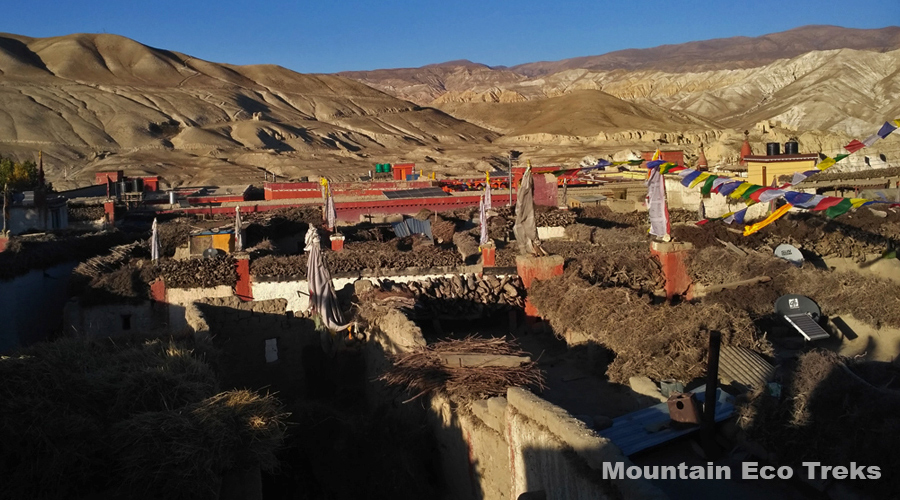
Hidden behind the rain-shadow of the Annapurna and Dhaulagiri massifs lies a land that time, and the monsoon, forgot. Upper Mustang — once the independent Kingdom of Lo — is a wind-carved desert of ochre cliffs, whitewashed monasteries, and a walled medieval capital that only opened its gates to outsiders in 1992. Trekkers call it the "Forbidden Kingdom", and after a few days on its trails, you'll understand why nothing else in the Himalaya feels quite like it.
Table of Contents
This guide covers everything you need to plan your trip: the full day-by-day itinerary, permit rules, realistic costs, the best season to go, and the attractions that make Upper Mustang worth every step. If you're ready to book, you can view the full trip details on the Upper Mustang Trek package page.
Why Trek to Upper Mustang
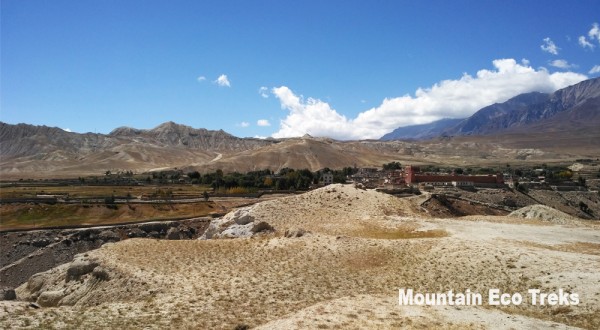
Unlike the glacier-and-forest trails of Everest or Annapurna, Upper Mustang is a high-altitude desert — closer in feel to the Tibetan plateau than to the rest of Nepal. Because it sits in the rain shadow of the Himalaya, it rarely sees rainfall, which means the trek stays open even during the monsoon months when most other Nepali trails turn muddy and cloud-covered.
Here, the reasons people come back year after year:
- A living Tibetan Buddhist culture that has remained largely unchanged for centuries
- The walled city of Lo Manthang, former seat of the Kingdom of Lo
- Ancient sky caves carved hundreds of meters up sheer cliff faces
- Some of the least crowded trails in Nepal, thanks to permit restrictions
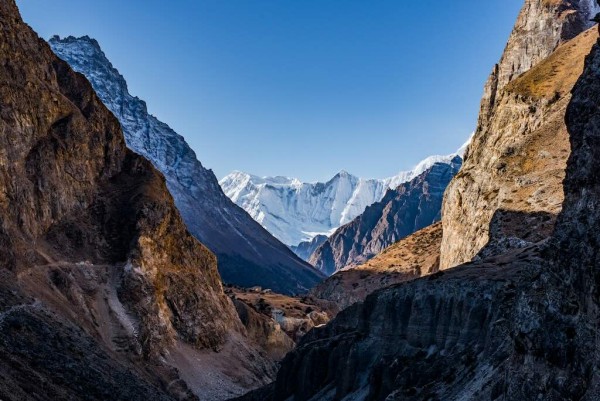
- Dramatic, otherworldly desert landscapes of red, ochre, and grey rock formations
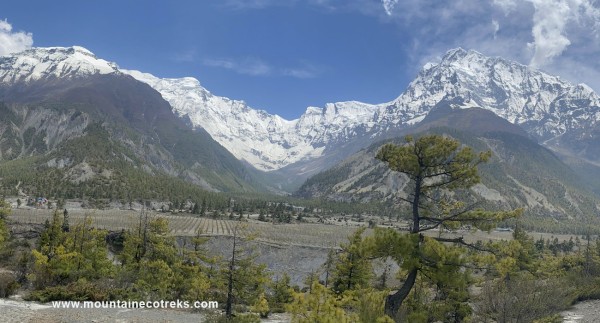
- Close-up views of Nilgiri, Annapurna, and Dhaulagiri without the crowds of the classic circuits
Upper Mustang Trek Overview
| Detail | Information |
|---|---|
| Duration | 14 days (Kathmandu to Kathmandu) |
| Trek Region | Mustang District, Gandaki Province |
| Max Altitude | Lo Manthang, approx. 3,840 m |
| Difficulty | Moderate |
| Trek Style | Teahouse / lodge-based |
| Starting Point | Jomsom (via flight or drive from Pokhara) |
| Restricted Area | Yes — special permit required |
| Group Requirement | Licensed guide mandatory |
| Best Season | March–June and September–November |
Best Time to Trek Upper Mustang
Because Upper Mustang lies in a rain shadow, it is one of the few treks in Nepal you can genuinely attempt in every season, but two windows stand out:
Spring (March–May): Warmer days, blooming valleys near Kagbeni and Marpha, and the chance to catch the vibrant Tiji Festival in Lo Manthang — a three-day masked-dance celebration re-enacting the triumph of good over evil.
Autumn (September–November): The most popular season, with the clearest mountain views, stable weather, and comfortable daytime trekking temperatures.
Monsoon (June–August): A hidden-gem season specifically for Mustang. While the rest of Nepal is soaked, Mustang stays dry, giving you clear trails without the crowds.
Winter (December–February): Very cold with strong winds; possible but only recommended for well-prepared, experienced trekkers.
Permits Required for Upper Mustang
Upper Mustang is a Restricted Area, which means independent trekking is not permitted — you must trek with a licensed guide through a registered agency, and every visitor needs the following:
1. Restricted Area Permit (RAP): Required to enter Upper Mustang beyond Kagbeni. Priced per person for the first 10 days, with an additional daily fee for each extra day inside the restricted zone.
2. Annapurna Conservation Area Permit (ACAP): Required because the trekking route runs through the Annapurna Conservation Area on the way to and from Mustang.
3. TIMS Card (Trekkers' Information Management System): A general trekking permit required across most regions of Nepal.
Your trekking agency typically arranges all three permits on your behalf as part of the package — this is one of the biggest reasons independent travelers still book through an operator for this particular trek.
Upper Mustang Trek Cost
Trek costs vary depending on group size, trip duration, and the level of service (lodge category, private vs. shared transport, flights vs. jeep). Broadly, a package for the Upper Mustang Trek includes:
Typically included:
- Airport pickup/drop-off in Kathmandu
- Kathmandu–Pokhara transport (flight or tourist bus)
- Pokhara–Jomsom flight or jeep drive
- All restricted area and conservation permits
- Licensed English-speaking trekking guide and porter
- Teahouse/lodge accommodation during the trek
- Full board meals (breakfast, lunch, dinner) while trekking
Typically excluded:
- International airfare to Nepal
- Nepal visa fees
- Travel insurance (with emergency evacuation cover)
- Personal expenses (snacks, hot showers, Wi-Fi, laundry, bottled drinks)
- Tips for guide and porter
Because pricing changes with the season, group size, and any customization (adding the Tiji Festival dates, extending toward Damodar Kunda, or upgrading accommodation), it's best to check current rates and get a tailored quote directly on the Upper Mustang Trek trip page.
Upper Mustang Trek Itinerary
This itinerary is built around acclimatization, cultural immersion in Lo Manthang, and a comfortable pace suitable for moderately fit trekkers.
Upper Mustang Trek – 17 Days Altitude & Elevation Table
| Day | Itinerary / Route | Starting Altitude | Destination Altitude | Maximum Altitude | Duration |
|---|---|---|---|---|---|
| Day 1 | Arrival in Kathmandu & Transfer to Hotel | — | 1,350 m | 1,350 m | — |
| Day 2 | Kathmandu Sightseeing & UNESCO World Heritage Sites | 1,350 m | 1,350 m | 1,350 m | Full day |
| Day 3 | Drive Kathmandu to Pokhara | 1,350 m | 820 m | 1,350 m | ~6 hrs |
| Day 4 | Fly Pokhara to Jomsom & Trek to Kagbeni | 820 m | 2,807 m | 2,807 m | ~4 hrs trek |
| Day 5 | Kagbeni to Chussang (Tsusang) | 2,807 m | 2,920 m | 2,920 m | ~6 hrs |
| Day 6 | Chussang to Samar | 2,920 m | 3,290 m | 3,290 m | ~6 hrs |
| Day 7 | Samar to Ghiling | 3,290 m | 3,600 m | 3,600 m | ~6 hrs |
| Day 8 | Ghiling to Tsarang (Charang) | 3,600 m | 3,520 m | 3,520 m | ~5 hrs |
| Day 9 | Tsarang to Lo Manthang | 3,520 m | 3,780 m | 3,780 m | ~5 hrs |
| Day 10 | Rest & Local Excursion in Lo Manthang | 3,780 m | 3,780 m | 3,780 m | Full day |
| Day 11 | Lo Manthang to Ghami | 3,780 m | 3,440 m | 3,780 m | ~6 hrs |
| Day 12 | Ghami to Samar | 3,440 m | 3,150 m | 3,440 m | ~5 hrs |
| Day 13 | Samar to Kagbeni & Transfer to Lodge | 3,150 m | 2,807 m | 3,150 m | ~5 hrs |
| Day 14 | Kagbeni to Jomsom | 2,807 m | 2,715 m | 2,807 m | ~4 hrs |
| Day 15 | Fly Jomsom to Pokhara & Transfer to Hotel | 2,715 m | 820 m | 2,715 m | Flight |
| Day 16 | Drive Pokhara to Kathmandu | 820 m | 1,350 m | 1,350 m | — |
| Day 17 | International Departure | 1,350 m | — | 1,350 m | — |
Upper Mustang Trek: Key Altitudes
| Location | Altitude |
|---|---|
| Kathmandu | 1,350 m / 4,429 ft |
| Pokhara | 820 m / 2,690 ft |
| Jomsom | 2,715 m / 8,907 ft |
| Kagbeni | 2,807 m / 9,209 ft |
| Chussang | 2,920 m / 9,580 ft |
| Samar | 3,290 m / 10,794 ft |
| Ghiling | 3,600 m / 11,811 ft |
| Tsarang | 3,520 m / 11,549 ft |
| Lo Manthang | 3,780 m / 12,402 ft |
| Ghami | 3,440 m / 11,286 ft |
Highest overnight altitude: Lo Manthang – 3,780 m (12,402 ft).
Note: Itineraries can be customized — shortened for experienced trekkers, extended to include the Tiji Festival, or combined with a Damodar Kunda or Saribung Pass extension. See the full customizable options on the official trip page.
Top Attractions in Upper Mustang
Lo Manthang — The Walled City
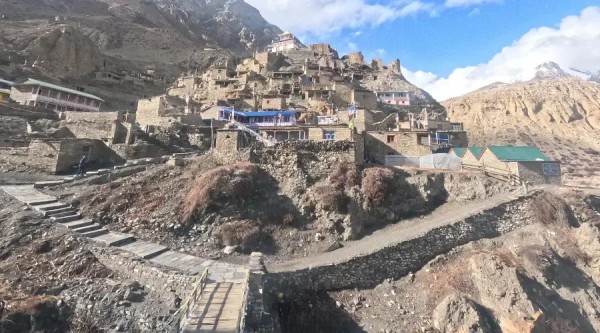
The heart of the trek. Lo Manthang was the capital of the independent Kingdom of Lo until it merged with Nepal, and its mud-brick walls still enclose the old royal palace, several centuries-old monasteries, and narrow lanes that feel frozen in the 15th century.
Chhoser Sky Caves
A vast network of man-made caves carved into vertical cliff faces, some reaching over 40 meters high. Archaeologists believe they were used for meditation, burial, and shelter over 2,000–3,000 years ago.
Charang Monastery and Fort
The red-walled Charang Gompa houses ancient thangkas and statues, while the crumbling five-story fort beside it hints at Mustang's fortified past.
Ghar Gompa
One of the oldest monasteries in Mustang, predating even Lo Manthang, tucked near Dhakmar's striking red-rock cliffs.
Kagbeni
A picturesque medieval village at the entrance to Upper Mustang, with narrow alleyways, an old monastery, and apple orchards — a great place to acclimatize before entering the restricted zone.
Kali Gandaki Gorge
Trekkers walk for days along the banks of the Kali Gandaki, often cited as one of the deepest gorges on Earth, flanked by the Annapurna and Dhaulagiri ranges.
Tiji Festival (Seasonal)
If your dates align with spring, the three-day Tiji Festival in Lo Manthang is a rare, vivid display of masked monk dances depicting the mythical defeat of a demon — one of the most authentic cultural events in the Himalaya.
Difficulty Level & Fitness Requirements
The Upper Mustang Trek is rated moderate. Most days involve 5–6 hours of walking on well-defined trails, with a maximum altitude around 3,840 m at Lo Manthang — significantly lower than Everest Base Camp or the Annapurna Circuit's Thorong La. That said, the terrain is dry, dusty, and often windy in the afternoons, and long uphill stretches occur on several days. A reasonable base level of fitness (regular walking, hiking, or cardio training beforehand) is enough for most trekkers to complete it comfortably.
Accommodation & Food During the Trek
Trekkers stay in teahouses/lodges throughout the route — simple, family-run guesthouses offering twin-sharing rooms and basic bedding. Facilities become more limited the deeper you go into Upper Mustang, so expect shared bathrooms and occasional cold showers in the more remote villages.
Meals are a mix of Nepali and Tibetan cuisine: dal bhat (lentils, rice, vegetables), thukpa, momos, noodle soups, and hot beverages like butter tea or ginger-lemon-honey tea, which helps with acclimatization.
Packing List for Upper Mustang Trek
- Windproof and waterproof outer jacket (Mustang's afternoon winds are notoriously strong)
- Warm layers for cold desert nights (down jacket recommended)
- Sturdy, broken-in trekking boots
- Sunglasses, sunhat, and high-SPF sunscreen (UV exposure is intense at altitude)
- Buff or scarf for dust protection
- Trekking poles for the uneven, rocky terrain
- Reusable water bottle or bladder with purification tablets/filter
- Basic first-aid kit and personal medications
- Power bank (electricity is limited in remote villages)
Frequently Asked Questions
1. Why is Upper Mustang called the "Forbidden Kingdom"?
Upper Mustang was closed to outside visitors until 1992, and even today it remains a restricted area requiring a special permit. The name reflects both its historical isolation as an independent Buddhist kingdom and the strict access rules that still protect it.
2. How much does the Upper Mustang Trek cost?
Package cost depends on trek duration, group size, and service level, but it typically covers permits, guide, porter, teahouse accommodation, and meals during the trek. Get an exact, up-to-date quote on the [Upper Mustang Trek trip page](https://www.mountainecotreks.com/trip/upper-mustang-trek).
3. Do I need a guide to trek Upper Mustang?
Yes. Upper Mustang is a restricted area, and trekking without a licensed guide through a registered agency is not permitted.
4. What permits do I need for Upper Mustang?
You need the Restricted Area Permit (RAP), the Annapurna Conservation Area Permit (ACAP), and a TIMS card. Your trekking agency typically arranges all three for you.
5. Is Upper Mustang trekking safe for beginners?
Yes, with a moderate fitness level and a licensed guide, beginners can comfortably complete the trek. Altitude is lower than most classic Himalayan treks like Everest Base Camp or the Annapurna Circuit.
6.How much walking is involved each day?
Most days involve 5–6 hours of walking, with a couple of longer 6–7 hour days when crossing high passes.
7. Can I do Upper Mustang during monsoon season?
Yes — it's actually one of the best monsoon treks in Nepal, since the region lies in a rain shadow and stays dry even when the rest of the country doesn't.
8. What is the highest point on the trek?
Lo Manthang sits at roughly 3,840 m, with some passes along the route reaching slightly higher.
9. How many days do I need for the Upper Mustang Trek?
Most itineraries run 10–14 days from Kathmandu to Kathmandu, though the trek can be shortened for experienced hikers or extended to include the Tiji Festival or side trips.
10. What is the main attraction of the Upper Mustang Trek?
The walled city of Lo Manthang is the trek's centerpiece — a medieval capital with a royal palace, centuries-old monasteries, and narrow lanes that have changed little in hundreds of years.
11. What are the Chhoser Sky Caves and can visitors go inside?
The Chhoser (or Chhoser) sky caves are man-made caves carved into cliff faces up to 40+ meters high, believed to be nearly 2,000–3,000 years old. Several caves near Lo Manthang are accessible to trekkers as part of the standard itinerary.
12. Can I witness the Tiji Festival while trekking?
Yes, if your dates fall in spring (typically May). The three-day Tiji Festival in Lo Manthang features masked monk dances and is one of the most authentic cultural events on the trek — many trekkers plan their trip specifically around it.
13. Are there monasteries to visit along the route?
Yes. Highlights include Charang Monastery, Ghar Gompa (one of the oldest in Mustang), Jampa Lhakhang, and Thubchen Gompa inside Lo Manthang.
14. Is Kagbeni worth visiting on the way to Upper Mustang?
Yes — Kagbeni is a well-preserved medieval village at the entrance to the restricted area, known for its old monastery, narrow alleys, and apple orchards, making it a great acclimatization stop.
15. Will I see mountain views on this trek, or is it just desert?
Both. While the core landscape is high-altitude desert, the route offers clear views of Nilgiri, Annapurna, and Dhaulagiri, along with the dramatic Kali Gandaki Gorge.
Ready to Trek the Forbidden Kingdom?
Upper Mustang rewards trekkers with something increasingly rare in the Himalaya: silence, space, and a culture that has survived largely untouched. Whether you're drawn by the walled city of Lo Manthang, the ancient sky caves, or simply the chance to walk through a genuine high-altitude desert, this is a trek that stays with you long after you're back in Kathmandu.
Check current dates, pricing, and customization options on the Upper Mustang Trek package page, and start planning your journey into Nepal's Forbidden Kingdom.
Recent From Blog

19th Apr, 2019


23rd Dec, 2018

11th Jan, 2024

14th Jan, 2024

29th Jan, 2025

11th Feb, 2025

18th Feb, 2025

25th Feb, 2025

5th Apr, 2025
23rd Dec, 2025
9th May, 2026
12th Jul, 2026

13th Aug, 2026
13th Aug, 2026
13th Aug, 2026

16th Aug, 2026
20th Aug, 2026


11th Sep, 2026
24th Sep, 2026
25th Sep, 2026
5th Oct, 2026
6th Oct, 2026
11th Oct, 2026