
Short Manaslu Circuit Trek Guide & Porter: The Complete Guide
4th Oct, 2026
Introduction: Manaslu in 11 Days
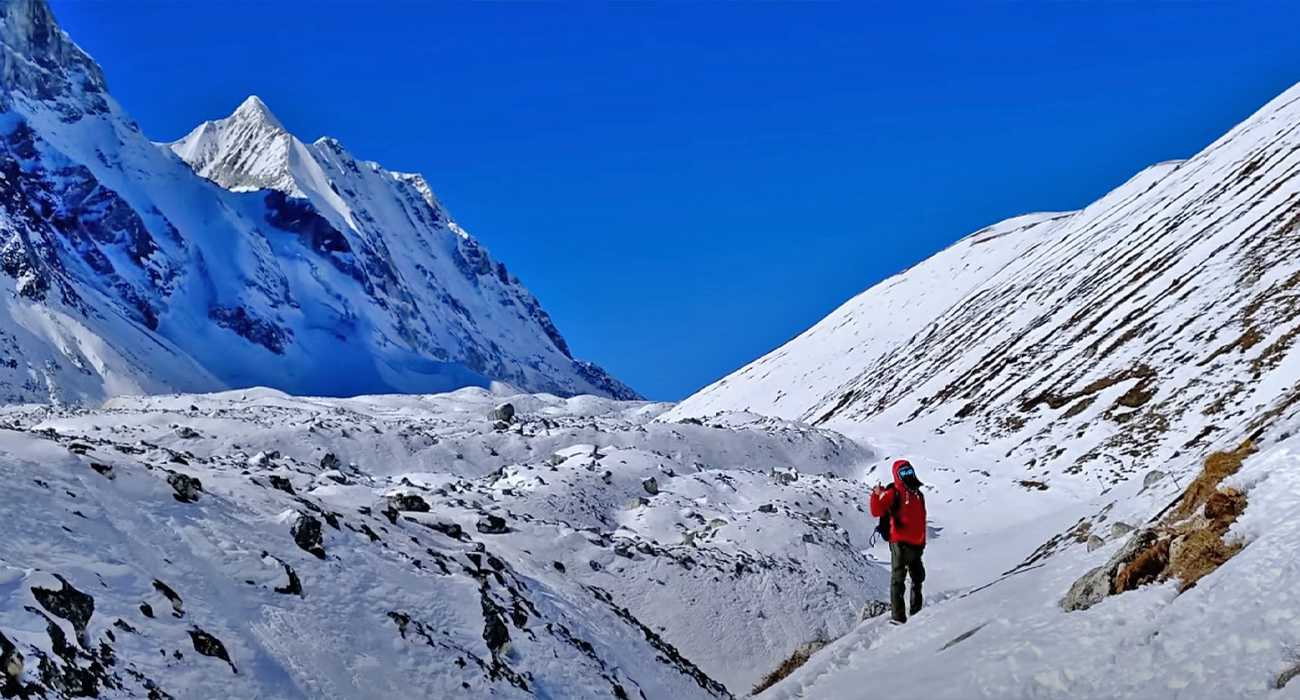
The Manaslu Circuit is one of Nepal's great Himalayan treks. The trail follows the Budhi Gandaki river through Gurung and Tibetan-influenced villages, climbs beneath Mount Manaslu (8,163 m), the eighth-highest mountain on Earth, and crosses the Larkya La Pass before dropping into the Marsyangdi valley. It is a restricted-area route, so it stays far quieter than Everest or Annapurna.
Table of Contents
Not everyone has two or three weeks to spare. The Short Manaslu Circuit Trek from Mountain Eco Treks compresses the loop into 11 days while keeping the main highlights: Samagaon, Samdo, the pass crossing and the alpine meadows beyond.
This guide covers the itinerary, permits, costs, the guide and porter service, the best season and the honest difficulty questions you should ask before you book.
Short Manaslu Circuit Trek at a Glance
| Detail | Information |
|---|---|
| Duration | 11 days |
| Grade | Moderate to adventurous |
| Start / end | Drive to Machha Khola; trek ends at Tilje, then drive to Kathmandu |
| Highest point | Larkya La Pass, about 5,106 m (some sources list up to 5,160 m) |
| Accommodation | Teahouse lodges, twin-sharing rooms |
| Meals | Breakfast, lunch and dinner on trek |
| Group size | 1 to 15 |
| Best seasons | March to May and September to December |
| Price | Standard US$1,485; Budget US$1,050 per person |
Why Choose the Short Manaslu Circuit?
- Fewer crowds: Special permits and a mandatory guide keep numbers lower than on the busiest Nepal trails.
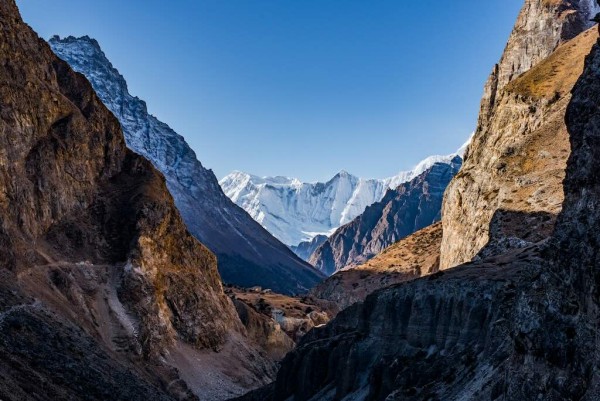
- Big mountain scenery: Manaslu, Himalchuli, Ngadi Chuli, Ganesh Himal, Annapurna II and Himlung Himal all feature along the route.
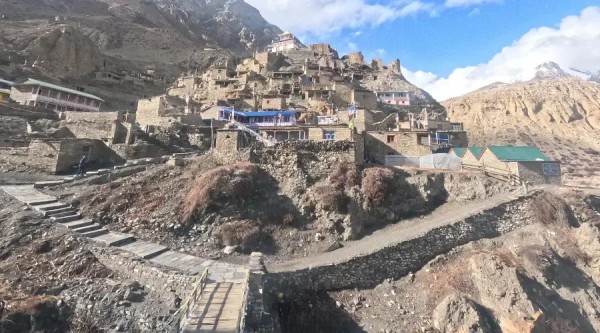
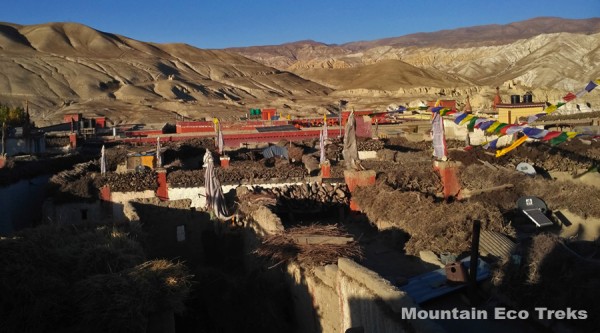
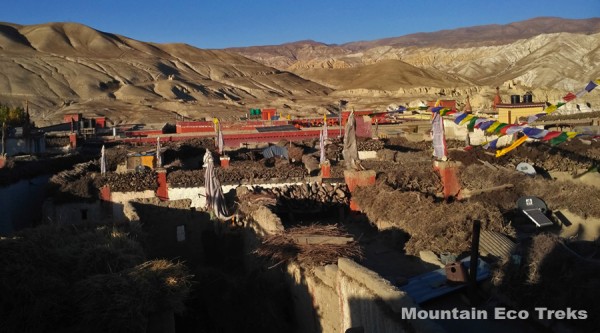
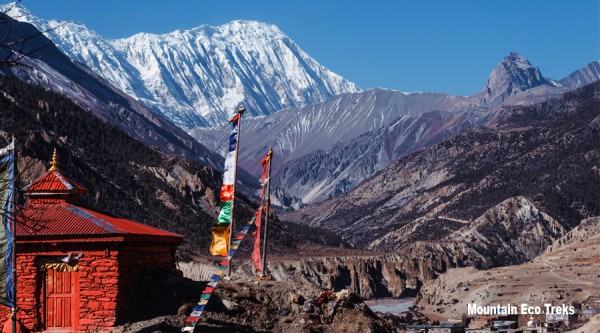
- Cultural depth: Mani walls, gompas and Tibetan-influenced villages such as Lho, Samagaon and Samdo.
- Birendra Lake: A glacial lake near Samagaon that makes a good acclimatization hike.
- A strong alternative: It suits trekkers comparing it with the Annapurna Circuit. Mountain Eco Treks also offers a Short Annapurna Circuit Trek if you want to compare.
- Teahouse comfort: No camping gear is needed.
Day-by-Day Itinerary
| Day | Route | Altitude | Trek time / drive |
|---|---|---|---|
| 1 | Drive Kathmandu to Machha Khola | 900 m | About 8 hrs drive |
| 2 | Machha Khola to Jagat | 1,410 m | 6 to 7 hrs |
| 3 | Jagat to Deng via Philim | 1,800 m | 6 to 7 hrs |
| 4 | Deng to Namrung | 2,630 m | 5 to 6 hrs |
| 5 | Namrung to Samagaon via Lho | 3,530 m | 7 to 8 hrs |
| 6 | Acclimatization day at Samagaon (Birendra Lake hike) | 3,530 m | Rest / short hike |
| 7 | Samagaon to Samdo | 3,860 m | 4 to 5 hrs |
| 8 | Samdo to Dharmasala (Larkya Phedi) | 4,460 m | 4 to 5 hrs |
| 9 | Dharmasala over Larkya La to Bimthang | 5,106 m pass; 3,720 m night | 8 to 9 hrs |
| 10 | Bimthang to Tilje | 2,300 m | 6 to 7 hrs |
| 11 | Drive Tilje to Kathmandu | 1,400 m | 8 to 9 hrs drive |
The operator's page lists the Day 9 overnight as "Bhimphedi". The village on the trail beyond Larkya La is normally spelled Bimthang (about 3,700 m), which matches the altitude given. Confirm the spelling and lodge with your guide.
Highlights by Stage
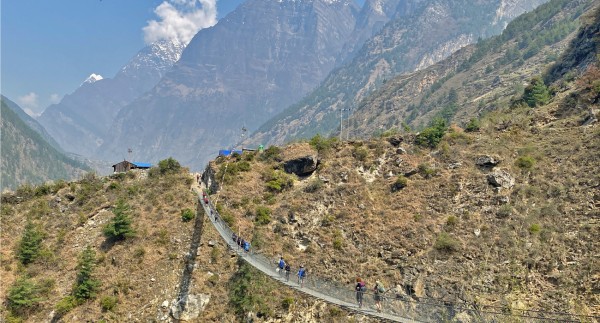
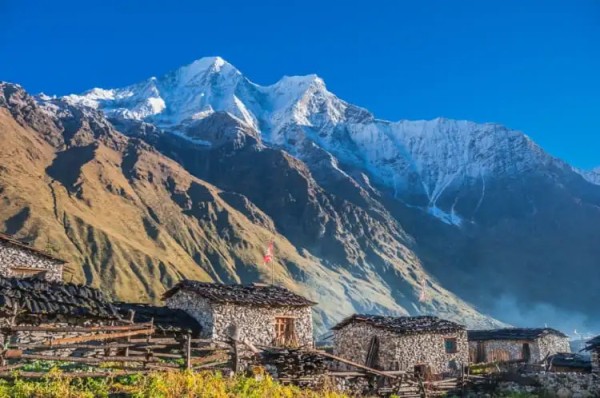
Days 1 to 4 (river gorge to forest): The trail follows the Budhi Gandaki through suspension bridges, terraced farms and stone villages. Philim and Namrung bring the first monasteries and mani walls.
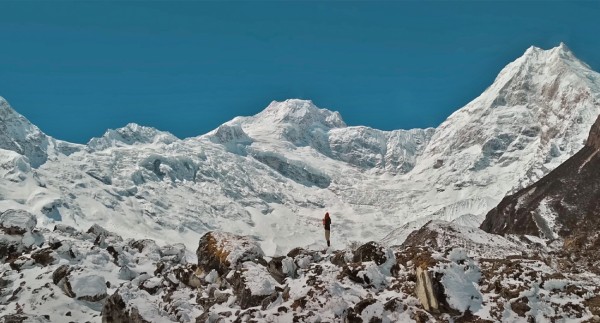
Days 5 to 7 (the high valley): After Lho, Manaslu appears close and enormous. Samagaon is the cultural heart of the route, and the rest day allows a hike to Birendra Lake or a visit to Pungyen Gompa.
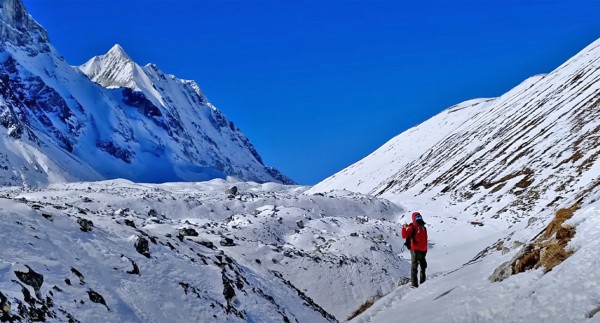
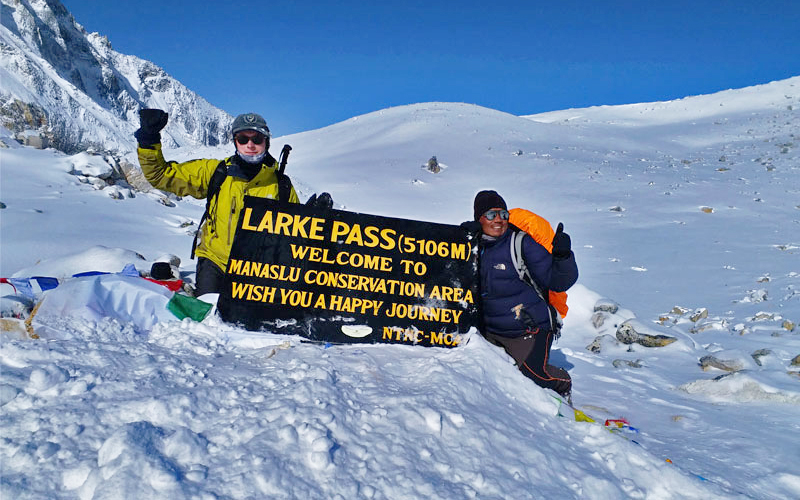
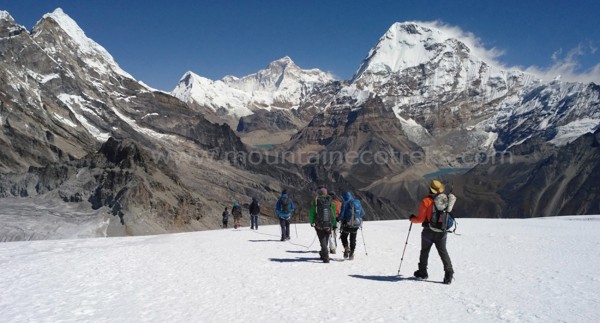
Days 8 to 9 (the pass): From Dharmasala you start early for Larkya La. The crossing is long and cold, with a steep descent afterward, but the views of Manaslu and neighboring peaks are the trek's reward.
Days 10 to 11 (the exit): The trail drops through forest and villages toward the Marsyangdi valley before the drive back to Kathmandu.
Guide and Porter Services: What You Need to Know
Because Manaslu is a restricted area, a licensed guide is not optional, and a porter makes the trek far more enjoyable. Here is how the service works with Mountain Eco Treks.
Licensed Trekking Guide (Mandatory)
- A government-licensed guide is required by law in the Manaslu restricted area, and permits are issued only through a registered agency.
- Solo trekkers are welcome, but they still travel with a guide, usually by joining a group departure or booking a private trip.
- Guides handle route-finding, teahouse bookings, permits checks, cultural explanations and altitude monitoring. The package includes regular oxygen saturation and pulse checks with an oximeter.
- The company states its guides are NTB-certified and first-aid trained, and the package lists full insurance for the guide.
Porter Service by Package
| Package | Porter arrangement |
|---|---|
| Standard (US$1,485) | One porter shared between two trekkers, with salary, meals, accommodation and insurance included |
| Budget (US$1,050) | Porter not included; available on request for an extra cost |
How Porters Help
A porter carries your duffel so that you only need a small daypack (about 10 to 15 liters) with water, a camera, snacks and a layer. On a trek with a pass above 5,000 m, that makes a real difference to comfort and energy.
Load Limits and Packing for a Shared Porter
With one porter for two trekkers, both bags travel together. As a general rule, many responsible operators keep a porter's total load to roughly 20 to 25 kg, which means about 10 to 12 kg per trekker. Ask Mountain Eco Treks for its exact limit, and pack light. Leave non-essentials in your Kathmandu hotel.
Responsible Porter Practices to Look For
When choosing any operator, ask whether they:
- Pay fair wages and provide meals and lodging for porters.
- Provide insurance for porters, as the Standard package states.
- Respect weight limits.
- Make sure porters have suitable clothing and footwear at altitude.
- Treat porters as team members.
Tipping guides and porters is customary in Nepal and is not included in the package price. Ask the company how it recommends handling tips at the end of the trek.
Permits and Costs
Required Permits
- Manaslu Restricted Area Permit (RAP)
- Manaslu Conservation Area Permit (MCAP)
- Annapurna Conservation Area Permit (ACAP), because the route finishes in the Annapurna area
- A local municipality entry fee
2026 Permit Fees (per operator's page)
| Permit | Cost |
|---|---|
| RAP, September to November | USD 100 for the first 7 days, plus USD 15 per extra day |
| RAP, December to August | USD 75 for the first 7 days, plus USD 10 per extra day |
| MCAP | USD 20 |
| ACAP | USD 20 |
| Municipality fee | USD 7 |
The operator estimates the total permit cost at around USD 150 to 160 per person. Permits are included in both packages, so you do not buy them separately.
Standard vs Budget Package
| Standard: US$1,485 | Budget: US$1,050 | |
|---|---|---|
| Airport transfers | Included | Included |
| Kathmandu hotel | 2 nights, 3-star, with breakfast | Not included |
| Trek transport | Private vehicle | Public transport (private on request) |
| Porter | 1 porter per 2 trekkers | Extra cost on request |
| Guide, permits, lodging, meals | Included | Included |
| Trek snacks | Energy bars and fruit | Not listed |
| Welcome dinner | Included | Included |
Not included in either: international flights, visa, Kathmandu lunches and dinners, drinks, personal expenses such as Wi-Fi, laundry and hot showers, travel insurance, personal gear and tips.
Best Time for the Short Manaslu Circuit
- October to November: Clear skies and stable weather. October is usually the strongest month.
- March to May: Warmer, with rhododendron forests and good visibility.
- June to August: Monsoon rain and landslide risk.
- December to February: Cold, with heavy snow possible and the pass at risk of closing.
Mountain Eco Treks lists group departures from October 2026 through May 2027, including dates such as 9, 15, 23, 29 and 31 October and 3, 8 and 13 November. Check availability on the trip page.
How Hard Is It? An Honest Look at Altitude
The trek is graded moderate to adventurous. Days run from 5 to 9 hours, and the pass day is the longest. No technical climbing is needed, but strong cardio fitness is essential, and previous high-altitude experience helps.
One thing to consider carefully: this is a compressed schedule. Day 5 climbs from Namrung (2,630 m) to Samagaon (3,530 m), a gain of about 900 m in one day, which is more than the general guidance of about 500 m of sleeping altitude gain per day above 3,000 m. The rest day at Samagaon helps, but if you are worried:
- Ask about the 12-day or 14-day versions that the operator offers.
- Build a spare buffer day into your trip in case of weather at the pass.
- Hydrate well, avoid alcohol, and report headaches or nausea early.
- Speak with your doctor about altitude medication before you travel.
- Never ignore symptoms of altitude sickness. Descending is the cure.
Getting to the Trailhead and Back
- Kathmandu to Machha Khola: About 160 to 180 km, 7 to 9 hours by private jeep, or longer by public bus. The last section after Arughat is rough, so a 4WD jeep is recommended.
- Return: Tilje or Dharapani to Besisahar by jeep (3 to 4 hours), then on to Kathmandu (6 to 8 hours).
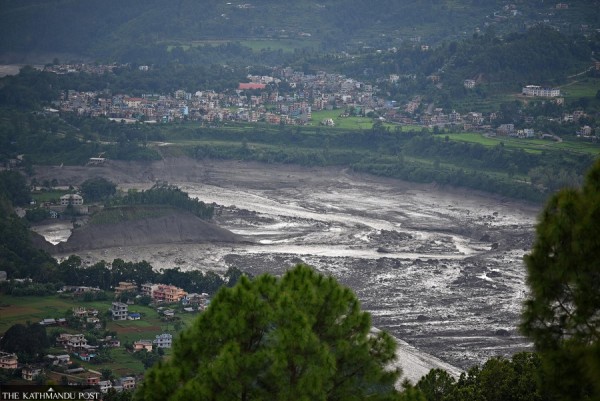
Because of monsoon landslides and recent flooding in parts of Nepal's mountain road network, ask your operator to confirm current road conditions on both the Arughat to Machha Khola section and the Marsyangdi side before departure.
What to Pack
Mountain Eco Treks provides a packing list on booking, and a down sleeping bag, down jacket and duffel are available on request. Key items:
- Down jacket, fleece, thermal layers, waterproof shell
- Waterproof, broken-in trekking boots and warm socks
- Gloves, hat and buff
- Trekking poles
- Sleeping bag suitable for cold nights
- Headlamp with spare batteries
- Sunglasses (UV400) and high-SPF sunscreen
- Water bottle and purification tablets
- Personal first aid and prescriptions
- Power bank and plug adapter
Why Book with Mountain Eco Treks?
Mountain Eco Treks is a Kathmandu-based, locally owned company. According to the company, it was founded by Ram Bahadur Tamang, who has more than 15 years of trekking and expedition experience, and it is registered with the Nepal Tourism Board and TAAN. The package covers permits, a licensed guide, lodges, meals and transfers, so there is little to arrange yourself. Past trekkers have specifically praised the guides and porters in their reviews.
Want to go longer? Explore the full 14-day Manaslu Circuit Trek or combine the region with the Tsum Valley Trek.
Short Manaslu Circuit Trek Guide & Porter: FAQs
1. What is the Short Manaslu Circuit Trek, and who is it for?
The Short Manaslu Circuit Trek is an 11-day version of the classic loop around Mount Manaslu (8,163 m), the world's eighth-highest peak. It follows the Budhi Gandaki valley through Jagat, Deng, Namrung, Lho, Samagaon and Samdo, crosses the Larkya La Pass, and finishes at Tilje in the Marsyangdi valley.
It suits trekkers who want a serious Himalayan crossing without a two- or three-week commitment. It is best for people with good cardiovascular fitness who are comfortable with long days and ideally have some previous experience above 3,500 m. If you are new to altitude or want a gentler pace, ask about the longer 12-day or 14-day versions.
2. Do I need a guide, and can I trek solo?
Yes, you need a guide. Manaslu is a restricted area, and Nepali regulations require trekkers to hold a Restricted Area Permit issued through a registered trekking agency, with a licensed guide accompanying them. You cannot walk the route independently.
You can still travel as a solo traveler. Many people join a group departure, which spreads the guide and logistics costs, or book a private trip. Mountain Eco Treks lists fixed group departures from October 2026 through May 2027, with group sizes from 1 to 15. Your guide handles permit checks, route-finding, lodge arrangements, pacing and altitude monitoring, which matters more on this trail than on busier routes where help is nearby.
3. Is a porter included, and how does the porter service work?
It depends on the package:
- Standard (US$1,485): One porter is shared between two trekkers. Salary, meals, accommodation and insurance for the porter are included.
- Budget (US$1,050): A porter is not included, but one can be added on request for an extra cost.
A porter carries your duffel so you walk with a small daypack (around 10 to 15 liters) holding water, a layer, snacks and a camera. When two trekkers share one porter, both bags travel together, so pack light. As a general guide, many responsible operators limit a porter's total load to roughly 20 to 25 kg, which works out to about 10 to 12 kg per trekker. Ask the team for their exact limit.
Also ask how porters are treated: fair pay, insurance, suitable clothing and footwear, and a place to sleep at every stop. Tips for guides and porters are customary in Nepal and are not included in the package price.
4. How much does the trek cost, and what is included?
According to the operator's page, the price is US$1,485 per person (Standard) or US$1,050 per person (Budget).
| Included in both | Standard only | Budget differences |
|---|---|---|
| Airport transfers, permits, licensed guide with insurance, 10 nights of twin-share lodging, three meals daily on trek, treated drinking water, local SIM card, oximeter checks, first aid, government taxes, welcome dinner | 2 nights in a 3-star Kathmandu hotel, private transport to Machha Khola and back from Tilje, shared porter, trek snacks | Public transport (private on request), no Kathmandu hotel, no porter unless added |
Not included in either package: international flights, visa, Kathmandu lunches and dinners, drinks, laundry, Wi-Fi, hot showers, travel insurance, personal gear and tips. Down jackets, sleeping bags and duffels are available on request.
5. What permits do I need, and how much do they cost?
You need three permits plus a local fee:
- Manaslu Restricted Area Permit (RAP): September to November, USD 100 for the first 7 days plus USD 15 per extra day. December to August, USD 75 for the first 7 days plus USD 10 per extra day.
- Manaslu Conservation Area Permit (MCAP): USD 20.
- Annapurna Conservation Area Permit (ACAP): USD 20, because the route exits through the Annapurna area.
- Local municipality entrance fee: USD 7.
The operator estimates the total at roughly USD 150 to 160 per person. All permits are arranged in Kathmandu by the agency and are included in both packages, so you only need to supply your passport details and photos. Keep your permits with you on the trail, as they are checked at several checkpoints.
6. How difficult is the trek, and how do I handle altitude?
The trek is graded moderate to adventurous. Walking days run from 5 to 9 hours, the highest sleeping point is about 4,460 m at Dharmasala, and the pass crossing is the hardest day. No technical climbing is required.
The main risk is altitude. This is a compressed itinerary: on Day 5 you climb from Namrung (2,630 m) to Samagaon (3,530 m), a gain of roughly 900 m, which is more than the general guidance of about 500 m of sleeping gain per day above 3,000 m. The rest day at Samagaon helps, but consider these precautions:
- Train with cardio and long hikes with a loaded pack for several weeks beforehand.
- Hydrate well, eat properly and avoid alcohol.
- Walk slowly and report headaches, nausea or unusual tiredness early.
- Ask your doctor about altitude medication before you travel.
- If you want more margin, choose a longer itinerary or add a buffer day.
If symptoms worsen, the correct response is to descend, not to push on.
7. What is the best time to trek, and which months should I avoid?
October and November are the most popular, with clear skies and stable weather, and October is usually the best month. March to May is also excellent, with warmer temperatures, rhododendron blooms and good visibility. December to February is cold, and heavy snow can close Larkya La. June to August is monsoon, with rain, leeches and landslide risk on the road and trail.
Mountain Eco Treks lists group departures in every one of these windows, so check availability on the trip page. If you choose winter, expect colder nights and the possibility that weather forces a change of plan.
8. What is the Larkya La crossing day like?
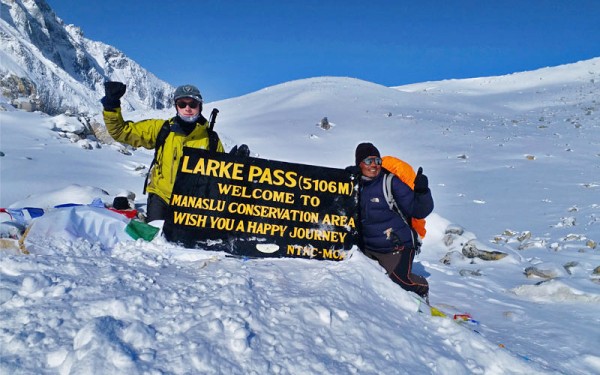
Day 9 is the toughest and most rewarding day. You leave Dharmasala (about 4,460 m) in the dark, usually between 3:00 and 5:00 AM, and climb steadily to Larkya La at about 5,106 m (some sources list up to 5,160 m). The climb is long and cold, and wind can be strong. At the top, prayer flags frame a wide panorama of Manaslu, Himlung Himal, Cheo Himal, Kang Guru and Annapurna II.
The descent to Bimthang (about 3,720 m) is long and steep, with a rocky and sometimes icy trail, so the whole day takes about 8 to 9 hours. Pack a warm layer, gloves, a hat, sunglasses and plenty of water, and keep snacks accessible. Conditions can change quickly, so your guide may adjust the start time or turn the group around if the weather is unsafe. A weather buffer day is wise if your schedule allows.
The operator's page spells the Day 9 overnight "Bhimphedi", but the village below the pass is normally spelled Bimthang. Confirm with your guide.
9. How do I get to the trailhead, and what are the roads like?
The trek starts with a drive from Kathmandu to Machha Khola, about 160 to 180 km and typically 7 to 9 hours by private jeep (longer by public bus). The road is smooth to Dhading Besi, then mixed to Arughat, and rough and off-road along the Budhi Gandaki valley. A 4WD vehicle is strongly recommended.
At the end, you drive from Tilje (or Dharapani) to Besisahar (about 3 to 4 hours by jeep), then on to Kathmandu (about 6 to 8 hours). In total, the operator estimates 16 to 21 hours of road travel.
Roads in Nepal's mountains can be disrupted by monsoon landslides and flooding, including in the Marsyangdi corridor. Ask your operator to confirm current conditions for both the Arughat to Machha Khola section and the Tilje to Besisahar section before departure, and allow a spare day at the end of your trip before an international flight.
10. What insurance, cash, connectivity and packing do I need?
Insurance: You need comprehensive travel insurance that covers high-altitude trekking and emergency helicopter evacuation. The operator's page mentions cover up to 5,000 m in one place and 5,500 m in another, so choose a policy that covers at least 5,500 m, and check that it covers evacuation and trek cancellation.
Cash: There are no ATMs on the trail. Carry enough Nepali rupees from Kathmandu for drinks, snacks, hot showers, charging and tips.
Connectivity: Basic Wi-Fi is available in some lower villages for a small fee, and mobile signal becomes limited above Samagaon. A local SIM card is included.
Packing: Bring a down jacket, thermal layers, waterproof shell, broken-in waterproof boots, warm socks, gloves, hat, trekking poles, headlamp, sunglasses, sunscreen, a water bottle with purification tablets and a personal first aid kit. A warm sleeping bag is essential. If you do not want to bring one, ask about borrowing a down sleeping bag and jacket from the company.
Extending your trip: You can combine Manaslu with the Tsum Valley Trek or choose the longer Manaslu Circuit Trek for a more gradual pace.
Final Thoughts
The Short Manaslu Circuit Trek is a good fit if you want a serious Himalayan crossing without a three-week commitment. The scenery is dramatic, the villages are authentic and the trails are quieter than most. A good guide and a well-treated porter team make the difference between a hard slog and a trip you remember for the right reasons.
Ready to plan? View dates and prices on the Short Manaslu Circuit Trek page, message Mountain Eco Treks on WhatsApp at +977 9803926665, or email info@mountainecotreks.com to ask about porter options, a private departure or a longer itinerary.
Recent From Blog

19th Apr, 2019


23rd Dec, 2018

11th Jan, 2024

14th Jan, 2024

29th Jan, 2025

11th Feb, 2025

18th Feb, 2025

25th Feb, 2025

5th Apr, 2025
23rd Dec, 2025
9th May, 2026
12th Jul, 2026

13th Aug, 2026
13th Aug, 2026
13th Aug, 2026

16th Aug, 2026
20th Aug, 2026


11th Sep, 2026
24th Sep, 2026