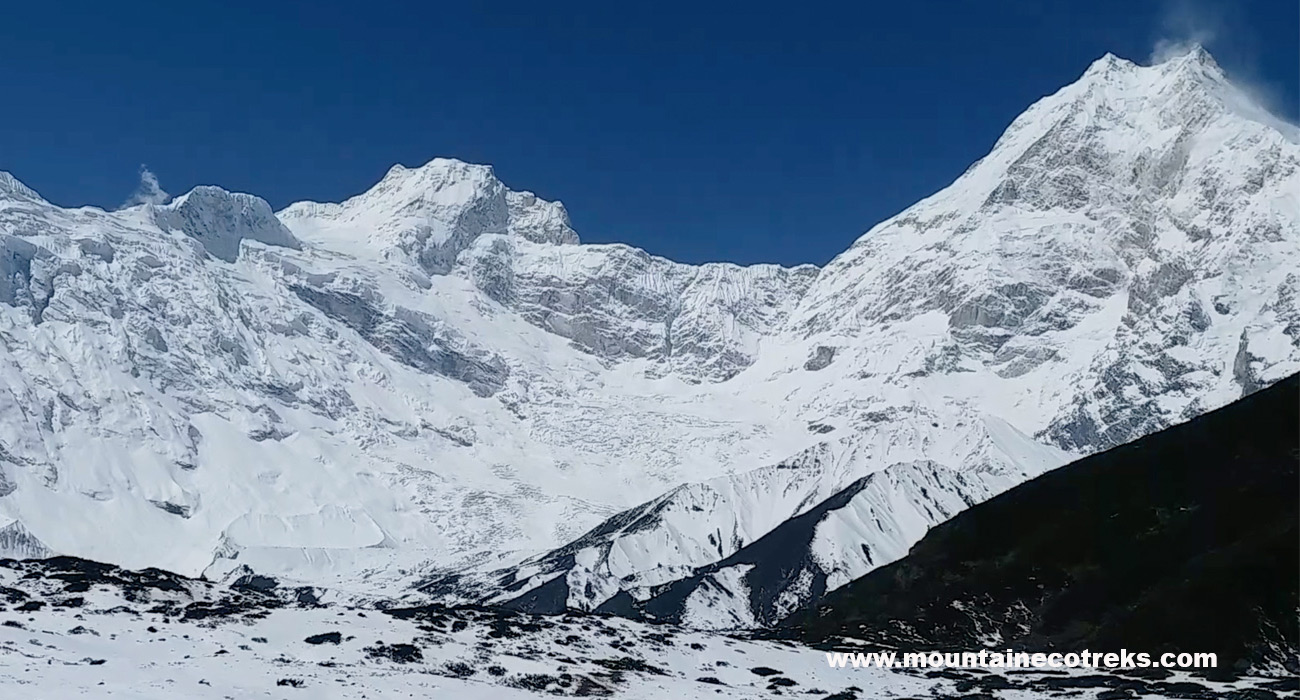
Stunning Views of Mount Manaslu (8,163m) & Himalayan Peaks: Trek beneath the world's 8th highest peak with panoramic views of Manaslu, Annapurna, Himlung, Ganesh, and Cheo Himal.
The Manaslu Circuit Trek in Nepal is a high-altitude trekking adventure that circles Mount Manaslu (8,163m), the world’s eighth-highest peak. This remote Himalayan trail offers a quieter and more untouched alternative to the Everest region, making it ideal for trekkers seeking a true off-the-beaten-path experience.
The route covers around 150–160 km in approximately 14 days, passing through the scenic Gorkha region. As a restricted trekking area in Nepal, the Manaslu region requires special permits and a licensed guide, helping preserve its natural beauty and cultural authenticity.
Starting from Soti Khola, the trail follows the Budhi Gandaki River, moving through deep gorges, suspension bridges, forests, and traditional farming villages. As the altitude increases, the landscape transforms into alpine terrain with stunning views of snow-capped peaks.
Key villages along the route include Jagat, Namrung, Samagaon, and Samdo, where trekkers experience authentic Tibetan-influenced culture, ancient monasteries, mani walls, and prayer flags. Samagaon is a major acclimatization stop and offers a popular side trip to Manaslu Base Camp.
The trek involves 5-8 hours of daily walking on steep and rugged trails, requiring good fitness and preparation, though no technical climbing skills are needed. The best seasons for the Manaslu Circuit Trek are spring (March-May) and autumn (September-November).
A major highlight is crossing the challenging Larkya La Pass (5,106m), which rewards trekkers with breathtaking Himalayan views. The trail then descends and connects with the Annapurna region at Dharapani, completing this unforgettable circuit.
Arrive at Tribhuvan International Airport, Kathmandu. Your Mountain Eco Treks representative will greet you and transfer you to your hotel in Thamel. Spend the day exploring Kathmandu's bustling streets, visit trekking supply shops, and sample authentic Nepali cuisine. In the evening, attend a comprehensive pre-trek briefing covering the full 13-day itinerary, permit requirements, gear checklist, and safety protocols.
Depart Kathmandu early morning by private jeep or public Bus . The scenic drive follows the Budhi Gandaki and Marsyangdi River valleys through terraced farmlands, hillside villages, and river gorges. The road becomes progressively rougher beyond Arughat Bazaar. Arrive at Machha Khola (930 m)-the official trailhead and starting point of the Manaslu Circuit Trek -and rest overnight at a local lodge.
The first full trekking day follows the Budhi Gandaki River north through dramatic gorges, suspension bridges, subtropical forests, and riverside settlements including Khorlabesi, Tatopani (natural hot springs), and Dobhan. The trail is mostly gradual with some short steep sections. Arrive at Jagat (1,340 m), the first major permit checkpoint village on the Manaslu route, where your Manaslu Conservation Area Permit (MCAP) will be checked.
Trek deeper into the Manaslu region through the villages of Sirdibas and Philim -where permits are checked again-before narrowing through bamboo groves and hanging rock faces. Cross the Siyar Khola bridge and follow the river to Deng (1,860 m), a small village marking the cultural transition from Hindu mid-hills to Tibetan-influenced highlands. First glimpses of Sringi Himal appear on the horizon.
Ascend steadily through dense pine and rhododendron forests, crossing the Budhi Gandaki River multiple times via suspension bridges. The trail passes through Rana Gaun, Bihi Phedi, and Ghap village before a final steep climb to Namrung (2,630 m). A security checkpoint here verifies your Restricted Area Permit (RAP). Namrung offers the first sweeping panoramic views of Ganesh Himal, Sringi Himal, and Himalchuli and is an essential acclimatization stop before the higher valleys ahead.
Pass through the villages of Lihi and Sho before reaching Lho (3,135 m), where the first dramatic close-up view of Mount Manaslu (8,163 m) appears above the Pungen Glacier. A short detour leads to the ancient Ribung Monastery (Pungen Gumba) -one of the oldest in the Manaslu region. Continue uphill through juniper and birch forests to Shyala (3,500 m), a quiet high-altitude village with exceptional all-round mountain panoramas. The shorter distance today allows critical acclimatization at altitude.
Trek through high alpine terrain, rocky moraines, and long mani walls with continuous views of Manaslu, Ngadi Chuli (7,871 m), and Himalchuli (7,893 m). Arrive at Samagaun (3,530 m)-the largest Nubri Tibetan-speaking village in the Manaslu region and the most important acclimatization base before the Larkya La Pass crossing. Explore the village monastery, local teahouses, and traditional stone architecture in the afternoon.
A mandatory rest and acclimatization day -essential for a safe Larkya La Pass crossing. Two highly recommended optional hikes include Birendra Glacial Lake (3,644 m), a pristine glacial lake with stunning Manaslu reflections approximately 1–2 hours uphill from the village, and Pungen Gumba Monastery (4,040 m), a steep hike above Samagaun with sweeping Himalayan views. Rest well, eat a nutritious dinner, and sleep early.
A short, gradual ascent through open alpine meadows and rocky high-altitude terrain with continuous views of the Manaslu massif. Samdo (3,860 m) is a small Tibetan-style village near the Nepal-Tibet border, surrounded by prayer flags and sweeping mountain ridges. Take an optional afternoon walk toward the old Tibet trade route. The reduced distance today is intentional conserve energy for the most demanding section of the trek ahead.
Ascend steadily over glacial moraines, boulder fields, and windswept ridges to reach Dharamsala (4,460 m) also known as Larkya Phedi, meaning "Foot of Larkya Pass"- the base camp for the Larkya La Pass crossing. Accommodation here is sparse and basic. Temperatures drop sharply after sunset. Eat a high-carbohydrate dinner, hydrate thoroughly, organize all gear tonight, and sleep by 8:00 PM. Tomorrow's alpine start begins before dawn.
The defining day of the Manaslu Circuit Trek. Depart Dharamsala between 4:00–5:00 AM by headlamp. The long ascent crosses snowfields and glacial terrain before reaching the summit of Larkya La Pass (5,160 m)-the highest and most spectacular point of the trek. The panoramic summit view includes Himlung Himal (7,126 m), Cheo Himal (6,820 m), Kang Guru (6,981 m), Annapurna II (7,937 m), and the full Manaslu massif behind you. Descend steeply through glacial valleys and rocky switchbacks into the lush green meadows of Bimthang (3,720 m)-rest, recover, and celebrate.
Descend through rhododendron and bamboo forests, cross the Dudh Khola River, and pass through traditional Gurung villages and terraced farmland. Arrive at Tilije (2,300 m), a charming village surrounded by forest marking the end of the high-altitude trail. From Tilije, board a waiting vehicle and drive through the scenic Marsyangdi River valley to Besisahar (800 m), the road junction connecting to the national highway.
An early morning departure from Besisahar follows the Prithvi Highway through Mugling, the Trishuli River valley, and the lower hills before arriving in Kathmandu (1,400 m) or Pokhara (827 m). Transfer to your hotel for a well-deserved hot shower, a restaurant meal, and comfortable rest. Your 13-day Manaslu Circuit Trek is complete.
After a final Nepali breakfast, our team transfers you to Tribhuvan International Airport, Kathmandu, for your onward international flight. Allow a minimum of 3 hours before departure for check-in and security. Your Manaslu Circuit Trek adventure concludes here- but the memories of the Himalayas stay with you forever. Safe travels-Namaste.
Service Types
Compare the available package types and choose the service level that matches your comfort, budget, and support needs.
Standard Package Cost
US$ 1585 per person
Budget Package Cost
US$ 1150 per person
It's a remote trekking route in Nepal that circles Mount Manaslu - the world's eighth-highest peak at 8,163 m. The trail passes through ancient Tibetan villages, glaciers, and crosses the Larkya La Pass (5,106 m). Less crowded than Everest or Annapurna, it's one of Nepal's most rewarding treks.
It's challenging. Expect 6-8 hours of walking daily on rough terrain, with the Larkya La Pass crossing being the hardest day. You don't need to be an athlete, but prior experience on a multi-day Himalayan trek is strongly recommended.
Spring (March-May) and autumn (September-November) are the best times. October is the most popular month - clear skies, dry trails, and stunning views. Avoid the monsoon season (June-August) and winter if possible.
The standard trek takes 11 to 14 days. With travel from Kathmandu and proper acclimatization days, plan for around 15-16 days in total.
You need four permits:
Mountain Eco Treks will arrange all of them on your behalf, so you can focus on preparing for the trail.
Yes - it's required by law. Manaslu is a restricted trekking area, so solo trekking is not allowed. You must have a government-licensed guide with you at all times. Hiring a porter is optional but highly recommended.
Most trekkers spend between USD 1,200 and USD 2,500 in total. This covers permits, guide and porter fees, accommodation, meals, and transport. Booking with a local Kathmandu agency costs less than going through an international operator.
Larkya La Pass at 5,106 m (16,752 ft). Most trekkers cross it before dawn - usually starting at 3-4 am - to avoid afternoon winds. Hard but unforgettable.
Yes. The trek spends several days above 3,500 m. Go slowly, rest when needed, drink plenty of water, and never ignore symptoms like a persistent headache or nausea. If you feel bad, descend. Many trekkers carry Diamox - ask your doctor first.
Basic teahouses throughout the route. You'll get a simple room with a bed and shared bathroom. Nothing fancy, but perfectly comfortable after a long day on the trail. Always carry your own sleeping bag rated to -10°C.
The essentials:
Travel light-your porter handles the heavy bag.
Not recommended. The altitude, remoteness, and long daily walks require some experience. Do the Annapurna Base Camp or Langtang trek first, then come back for Manaslu.
Most treks start at Soti Khola or Machha Khola. It's a 7-10 hour drive from Kathmandu via Arughat. Mountain Eco Treks handles all transport arrangements as part of your package.
Yes. The most popular combination is with the Tsum Valley (19-20 days) - a hidden, rarely visited Himalayan valley. You can also connect to the Annapurna Circuit via Dharapani for a full trans-Himalayan journey of 20-22 days.
Yes, if you prepare properly. Go with a licensed guide, acclimatize well, carry the right gear, and get travel insurance with high-altitude helicopter evacuation coverage (minimum 5,500 m). The route is quieter than other treks-keep that in mind when it comes to getting help in an emergency.
Foreign nationals can obtain a Nepal tourist visa on arrival at Tribhuvan International Airport or at designated land border entry points from India and Tibet. Travelers can also apply for an online visa in advance through the official immigration system.
Nepal Tourist Visa Requirements
To apply for a Nepal visa, travelers need:
Nepal Tourist Visa Fees
Visa fees and rules may change as per Nepal Immigration regulations.
Nepal Visa Extension
Tourist visas can be extended at the Department of Immigration in Kathmandu.
Advice to Travelers
Trekking Permits in Nepal
Trekkers visiting national parks, conservation areas, and restricted regions such as the Everest Region, Annapurna Region, and Manaslu Region require trekking permits. Some restricted areas also require special permits issued through a registered trekking agency in Nepal.
Plan Your Nepal Adventure with Mountain Eco Treks