The Everest Base Camp with Gokyo Lake Trek is one of those rare journeys that asks a great deal of you - and gives back even more. This isn't just a walk to Base Camp. It's a full immersion into the heart of the Khumbu, weaving together two of Nepal's most spectacular destinations into one unforgettable journey through ancient Sherpa villages, sweeping glacial moraines, and the jewel-green silence of the sacred Gokyo Lakes.
What makes this combined route so special is how much it rewards patience. Most trekkers who've done it will tell you the same thing - it changes the way you see the mountains.
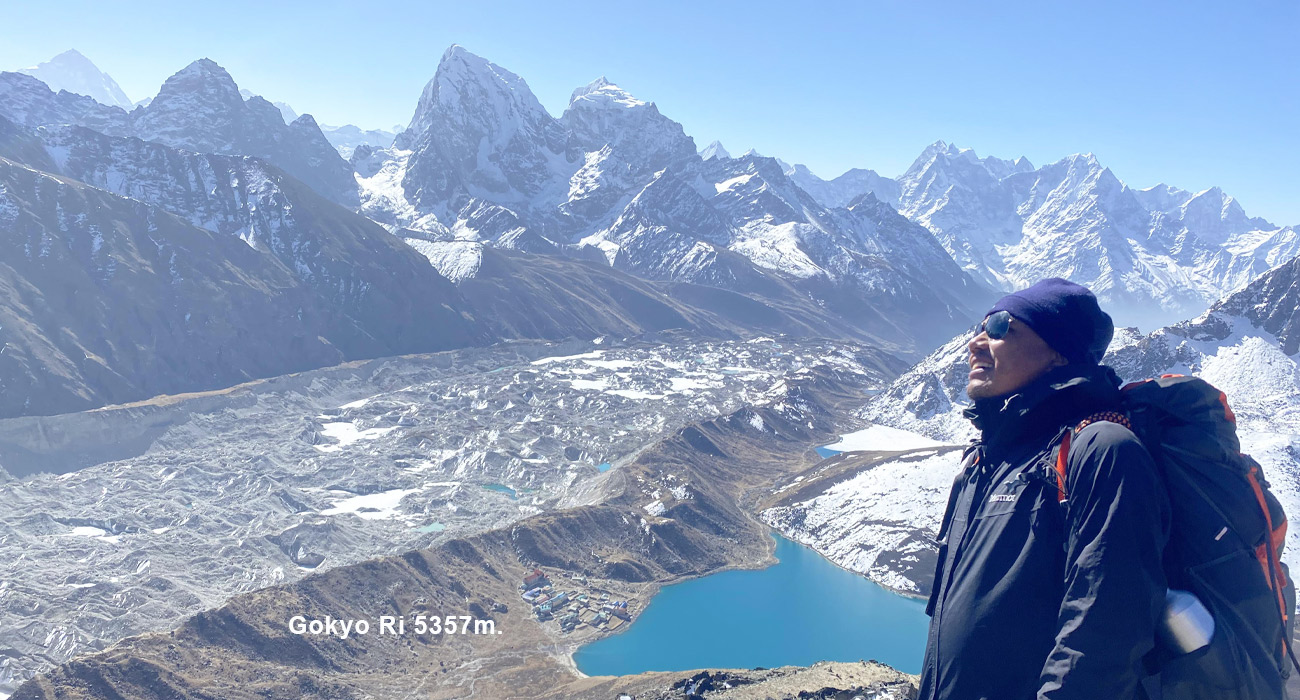
The trail begins in Lukla and climbs steadily through the buzzing streets of Namche Bazaar before splitting into two worlds. Head west and the Gokyo Lake Trek corridor opens up - a quiet, stunning valley of glacially-fed lakes perched above 4,700 m. Climb Gokyo Ri (5,357 m) at dawn and you'll be rewarded with one of the Himalayas' greatest panoramas: Everest, Lhotse, Cho Oyu, and Makalu all at once, with no crowds and no noise - just mountains.
From there, the route crosses the legendary Cho La Pass (5,420 m) - a genuinely thrilling high-altitude traverse - before dropping down to the Khumbu Glacier and pushing on to Everest Base Camp (5,364 m). Standing there, surrounded by the gear and ambition of real expedition teams, is a feeling that's hard to put into words.
Be honest with yourself before booking: this is a strenuous, high-altitude expedition. You'll need solid fitness, prior multi-day trekking experience, and genuine respect for altitude. Sickness can affect anyone above 3,500 m, which is why rest days at Namche Bazaar and Dingboche are built into every good itinerary. Plan for 15 to 18 days on the trail, and time your trip for March to May or September to November for the best conditions.
If comfort matters to you on the road, Everest Base Camp Luxury Trek packages are worth every penny - think warm, well-appointed teahouses, attentive Sherpa guides, and proper meals at altitude. It's the same incredible journey, just with a softer landing each evening.
Short on time after Base Camp? The Everest Base Camp Trek with Helicopter Return is a genuinely brilliant option. The flight back over the Khumbu Icefall and Himalayan ridgelines is an experience in itself - and it saves your knees a few hard days of descent.
Before you set off, make sure you have your Sagarmatha National Park Entry Permit and Khumbu Pasang Lhamu Rural Municipality Permit sorted - the team at Mountain Eco Treks can handle all permit arrangements so you can focus entirely on the adventure ahead.
This route delivers perspective as much as it delivers altitude. From prayer-flag-draped Buddhist monasteries to the wind-scoured silence of the high passes, every day on this trail feels earned. If you're ready for the Himalayas at their most complete, there's no better place to start than here - on the route that defines Nepal trekking at its absolute finest.
Note: Mountain Eco Treks offers this trekking itinerary in three service categories—Standard, and Budget—allowing you to choose the level of comfort that best matches your travel preferences. For a complete breakdown of what each package includes, please visit the Cost Includes and Excludes section
Land in Kathmandu, Nepal's vibrant capital sitting at 1,400 m above sea level. This is your preparation day - meet your guide, sort your gear, collect , and get a full trek briefing. If you arrive with energy to spare, the ancient temples of Boudhanath and Swayambhunath are worth an evening stroll.
Flights to Lukla depend on the season. During peak trekking seasons - October, November, March, and April - flights operate via Manthali Airport (Ramechhap) with an early 4–5 hour drive from Kathmandu before the 12–15 minute mountain flight. In other months, flights depart directly from Kathmandu. From Lukla (2,860 m), the trail drops gently through pine forest and riverside paths to the teahouse village of Phakding (2,610 m).
This is the day the Everest Base Camp Gokyo Trek gets serious. From Phakding, the trail follows the roaring Dudh Koshi River, crossing a series of iconic high suspension bridges - including the legendary Hillary Suspension Bridge - before the steep, lung-burning final climb into Namche Bazaar (3,440 m), the beating heart of the Khumbu and the highest Sherpa trading town in the world. On a clear day, catch your first proper glimpse of Mount Everest through the valley. Hard work, but the arrival is electric.
Never skip this day. Your body needs time to adjust to the altitude before pushing any higher - and skipping acclimatization is the single most common reason trekkers turn back before EBC or Gokyo Ri. Hike up to the Everest View Hotel (3,880 m) for a panoramic face-to-face with Everest, Ama Dablam, Lhotse, and Thamserku. Browse Namche's colourful market, visit the Sherpa Culture Museum, and find the best espresso above 3,000 m. Sleep here again tonight. Tomorrow, everything gets higher.
One of the most visually spectacular days on the entire Everest Base Camp with Gokyo Lakes Trek. The trail rolls through rhododendron and juniper forest with Ama Dablam (6,812 m) rising dramatically over your left shoulder the whole way. You arrive at Tengboche (3,860 m), home to the largest and most revered Buddhist monastery in the Khumbu region. If timing works out, sit in on the evening puja ceremony - monks chanting low against a backdrop of Himalayan giants is the kind of moment that stays with you long after the trek ends.
The landscape shifts visibly today. Trees give way to wide-open alpine valleys and stone-walled yak pastures as you climb steadily toward Dingboche (4,410 m). The trail passes through the ancient Sherpa village of Pangboche and crosses the Imja Khola river. By the time you reach Dingboche, the views of Lhotse (8,516 m), Island Peak (6,189 m), and Ama Dablam are extraordinary from every angle. You're at high altitude now - eat well, hydrate constantly, and sleep the moment you feel tired.
Your second and final acclimatization day before the high-altitude push. Hike up to Nagarjun Hill (5,100 m) for sweeping 360° views of Makalu, Cho Oyu, and the surrounding peaks - then return to sleep at Dingboche. The golden rule holds: climb high, sleep low. This rest day is not a luxury - it's the reason most trekkers make it to the top. Don't rush it.
A shorter but emotionally resonant day. The trail climbs through stark, wind-swept Khumbu Glacier moraine, passing the Thukla Pass memorial - a windswept ridge lined with stone cairns built in honour of climbers who lost their lives on Everest. It's a sobering, moving pause in an otherwise grand adventure. Lobuche (4,940 m) welcomes you with thin air and warm teahouse meals. Rest as much as you can - tomorrow is the biggest day.
The day every trekker on this route has been building toward. Trek across the Khumbu Glacier moraine to Gorakshep (5,164 m) for lunch, then push on to Everest Base Camp (5,364 m / 17,598 ft) - the legendary staging ground at the foot of the Khumbu Icefall. Standing at Everest Base Camp beside the Khumbu Glacier and beneath the towering Khumbu Icefall is one of the most powerful moments of the trek. The scale of everything around you - the ice, the silence, the sheer vertical walls of Everest's Southwest Face - is simply unlike anything else. A long, demanding day, but one you'll talk about for the rest of your life.
Rise well before sunrise for the pre-dawn hike to Kala Patthar (5,545 m) - the finest viewpoint for Mount Everest (8,848 m) on this entire Everest Circuit Trek, better than Base Camp itself for mountain views. Watch the first golden light of dawn paint Everest's summit pyramid in shades of orange and pink. Then begin the long descent and traverse to Zongla (4,830 m), the last overnight stop before the Cho La Pass crossing. Rest well - the pass awaits.
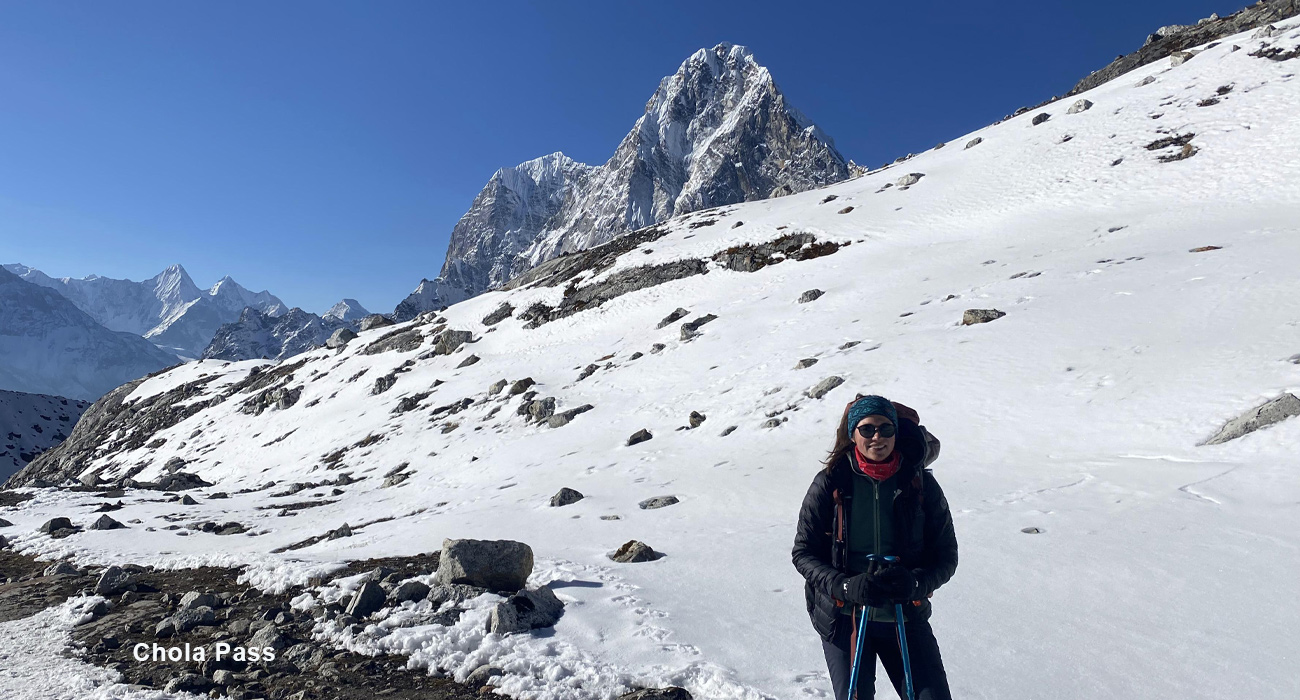
The most demanding day of the entire Gokyo Lakes Trek via Cho La Pass - and one of the most rewarding. From Zongla, the trail climbs steeply toward Cho La Pass (5,420 m) - a high, glaciated mountain pass connecting the Everest region to the Gokyo Valley. The final ascent involves rocky, icy terrain where trekking poles are essential and microspikes may be needed depending on conditions. At the top, the Himalayan panorama is staggering. The descent on the Gokyo side is steep and technical before the trail gradually levels out across the Ngozumpa Glacier, the longest glacier in Nepal, and brings you all the way to the magical village of Gokyo (4,790 m), sitting beside the sacred, shimmering Dudh Pokhari Lake. It's a long, tough day - but arriving in Gokyo after crossing Cho La feels like a genuine achievement. Rest well tonight - tomorrow's summit hike starts before sunrise.
An early morning summit of Gokyo Ri (5,357 m) rewards you with what many experienced trekkers call the single best mountain panorama in the Everest region - four 8,000 m peaks visible simultaneously: Everest (8,848 m), Lhotse (8,516 m), Makalu (8,463 m), and Cho Oyu (8,201 m). Many trekkers say this view surpasses Kala Patthar. After absorbing the summit panorama, descend back through the Gokyo Valley all the way to Dole (4,038 m) - a long descent, but your legs will feel lighter knowing the hardest days are behind you.
The Everest Base Camp Gokyo Trek difficulty eases significantly today. The descent continues through rhododendron forests and familiar valley scenery, returning to the welcoming streets of Namche Bazaar (3,440 m). Notice how much easier breathing feels compared to a week ago - that's real acclimatization doing its work. Celebrate with a hot shower, a proper meal, and stories shared with fellow trekkers. You've absolutely earned it.
The longest trekking day of the entire journey - and a bittersweet one. The 19 km trail from Namche back to Lukla (2,860 m) retraces your early footsteps through Phakding and Benkar, across the suspension bridges, along the riverside paths - all of it looking and feeling different now that you've been to Base Camp, crossed Cho La, and stood on Gokyo Ri. Let it all sink in on the walk. Raise a glass in Lukla tonight.
Your final morning in the mountains. Depending on the season, your flight back departs directly from Lukla to Kathmandu - or routes via Manthali, with a 4–5 hour drive back to the capital after landing. The short flight out of Lukla offers glimpses of the surrounding ridgelines and valleys before the landscape flattens out toward the Terai. By evening you'll be back in Kathmandu at 1,400 m, already missing the thin air and the silence of the high valleys.
Service Types
Compare the available package types and choose the service level that matches your comfort, budget, and support needs.
Standard Package Cost
US$ 1695 per person
Budget Package Cost
US$ 1395 per person