The Everest Base Camp Trek is one of the most iconic adventures in the world. Every year, thousands of trekkers travel to Nepal to walk this legendary trail. The route takes you through the Khumbu region, passing Sherpa villages, ancient monasteries, and breathtaking mountain landscapes. The EBC Trek Nepal offers the perfect mix of natural beauty, Sherpa culture, and personal achievement. Trekkers who want a faster return can choose the Everest Base Camp Trek With Helicopter Return, which adds a thrilling aerial finish to the adventure.
Most trekkers follow the classic EBC Trek itinerary 14 days, starting with a thrilling mountain flight from Kathmandu to Lukla. The route passes through iconic stops including Namche Bazaar, Tengboche Monastery, Dingboche, Lobuche, and Gorak Shep before finally arriving at Base Camp itself. The highlight for many is standing on Kala Patthar viewpoint at 5,545 meters, widely regarded as the best spot for close-up panoramic views of Mount Everest and neighboring Himalayan giants. The trekking route is served by well-equipped teahouse lodges offering warm meals and comfortable beds at every stop. Trekkers seeking extra comfort can opt for the Everest Base Camp Luxury Trek, with premium lodges and private guides throughout.
The difficulty of this trek is rated moderate to challenging. The trail is not technical, but high altitude, long walking days, and changing weather make it demanding. A well-planned trekking package always includes acclimatization days to help your body adjust safely and reduce the risk of altitude sickness. Trekkers with limited time can still experience the Khumbu region with the Everest View Trek, which offers stunning Everest panoramas without the full trail commitment.
The best time to trek to Everest Base Camp is spring from March to May and autumn from September to November. Spring brings stable weather and blooming rhododendrons. Autumn delivers crystal clear skies and sharp mountain views. Winter from December to February offers quiet snow-covered trails for well-prepared trekkers. The monsoon from June to August brings lush green valleys and fewer crowds, making it a rewarding season with the right preparation. The Everest Base Camp Short Trek is ideal for those who want the key highlights in fewer days.
The trek cost depends on package type, group size, and service level. Every trekker must hold a valid trekking permit, including the Sagarmatha National Park entry permit. All EBC Trek 2026 packages include permits and full logistical support. A complete packing list should include layered clothing, a down jacket, waterproof gear, trekking boots, trekking poles, a sub-zero sleeping bag, a water purification system, and altitude medication such as Diamox. Book your Everest Base Camp adventure with Mountain Eco Treks for safety, expert guidance, and an unforgettable Himalayan experience.
The trek is moderately challenging, requiring good fitness and preparation. Daily hikes range from 5 to 7 hours, with proper acclimatization to avoid altitude sickness. No technical climbing is needed, but mental and physical endurance is essential.Here are some highlights of the challenges of the trek.
High altitude and acclimatization:The trek to EBC is at 5,364 m EBC and , Kalapathar at 5,545 m. Altitude sickness is a major concern, gradual ascents and rest days help with acclimatization.
Trek duration and daily distance:Typically 12-14 days of trekking, covering 130 km round trip. Hikers should walk 5-7 hours, 8-18 km, daily.
Terrain and trekking conditions: A mix of steep climbs, rocky treks, suspension bridges and glaciers.
Weather challenges: Temperatures drop below -10°C (14°F) in winter and nights are cold even during peak season. Sudden weather changes and snowfall can make the trek difficult.
Fitness and training requirements: Moderate to high fitness is required; leg strength, and endurance training will help you.It would be beneficial if you have previous hiking experience, but it is not required
Note: Mountain Eco Treks offers this trekking itinerary in three service categorie-Luxury, Standard, and Budget-allowing you to choose the level of comfort that best matches your travel preferences. For a complete breakdown of what each package includes, please visit the Cost Includes and Excludes section
You land at Tribhuvan International Airport and a Mountain Eco Treks team member is already there waiting to bring you to your hotel . The rest of the day is yours - unpack, meet your guide, and get your head in the right place. We handle the paperwork: Sagarmatha National Park Entry Permit and Pasang Lhamu Municipality Entrance Fee, both sorted before morning.
An early flight into Tenzing-Hillary Airport at Lukla (2,860m) is followed by a gentle trail descent along the Dudh Koshi River through Sherpa villages to Phakding (2,610m). The runway landing alone is something people talk about for years. The path from Lukla eases downhill through pine-shaded forest - a deliberate gentle opener while your body begins adjusting to altitude.
Flight Note: Flights operate either direct from Kathmandu or via Manthali Airport (Ramechhap) - a 4-5 hour drive. Peak season (March-May, September-November) flights are mostly routed through Manthali. Mountain Eco Treks will confirm your departure point in advance.
A steady climb through Sagarmatha National Park leads you across the Hillary Suspension Bridge and up to Namche Bazaar - with your first clear view of Everest just before you arrive. The bridge swings high above the roaring gorge and stops most trekkers in their tracks. Namche is warm and busy - a Sherpa market town full of good food, gear shops, and trekkers from everywhere on earth.. You did.
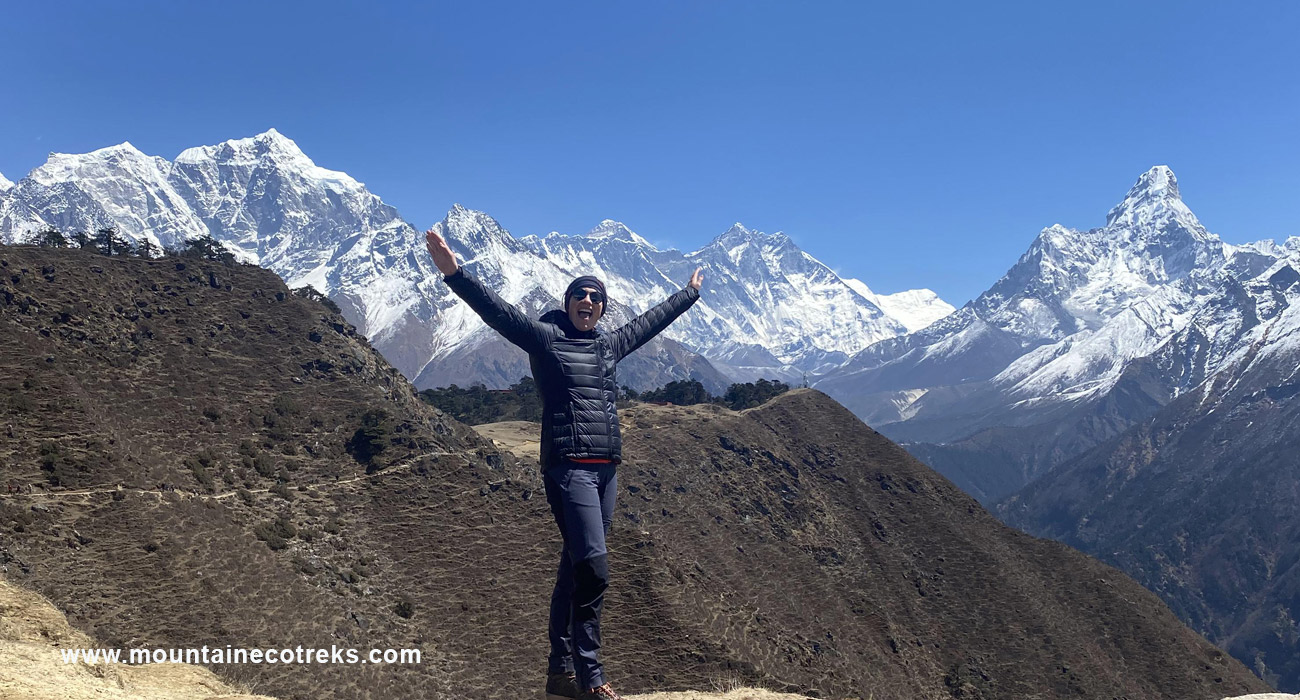
A morning hike up to the Everest View Hotel (3,880m) puts Everest, Ama Dablam, Lhotse, and Thamserku right in front of you - then you come back down to sleep in Namche. Climb high, sleep low - the golden rule above 3,000m, and today you follow it. Back in town the Sherpa Culture Museum is worth an hour and the Saturday market is worth a wander if the timing lines up.
A high contour trail above the valley floor passes through Kyangjuma, Sanasa, and Phunki Thanka before the final climb to Tengboche and its famous monastery. The most important Buddhist monastery in the Khumbu sits ringed by peaks on all sides. Arrive in time for evening prayers and the sound of drums and horns rolling out across the mountains stays with you long after you leave.
The trail descends into the Imja Khola valley, passes through ancient Pangboche, then climbs into open glacial terrain to reach Dingboche (4,410m). Above Pangboche the trees disappear completely and the landscape turns wide and raw - yak pastures, stone walls, and Island Peak (6,189m) rising sharply with Makalu (8,485m) on the far horizon.
A hike up to Nangkartshang Peak (~5,100m) delivers a full 360° view of Makalu, Lhotse, Baruntse, and the Amphu Laptsa - then back down to rest in Dingboche. Tomorrow you cross above 4,900m so today is not optional. Come back down, hydrate, eat well, and let your body do its quiet work overnight.
The trail passes the Thukla Memorial Cairns - stone monuments to climbers lost on Everest - then crosses into raw glacial moraine to reach Lobuche (4,940m) at the edge of the Khumbu Glacier. Almost everyone slows down at the cairns without being asked to. Pumori (7,161m) and Nuptse (7,861m) fill the view from the teahouse windows. Sleep well tonight.
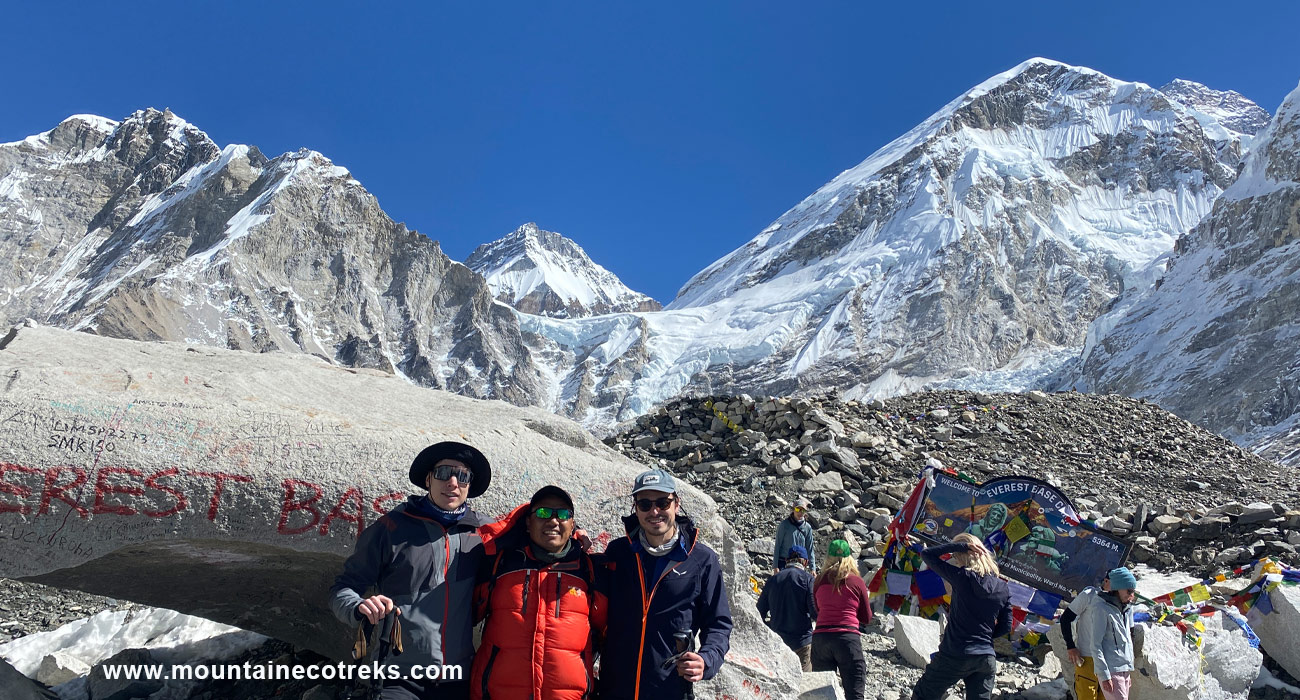
From Gorakshep (5,164m) - the last teahouse stop - you push on across boulder fields and glacial ice to reach Everest Base Camp at 5,364m. You are standing at the foot of the Khumbu Icefall on the same ground every Everest expedition has used since 1953. During spring season, colorful expedition tents spread across the glacier in front of you. Take your time here.ase Camp
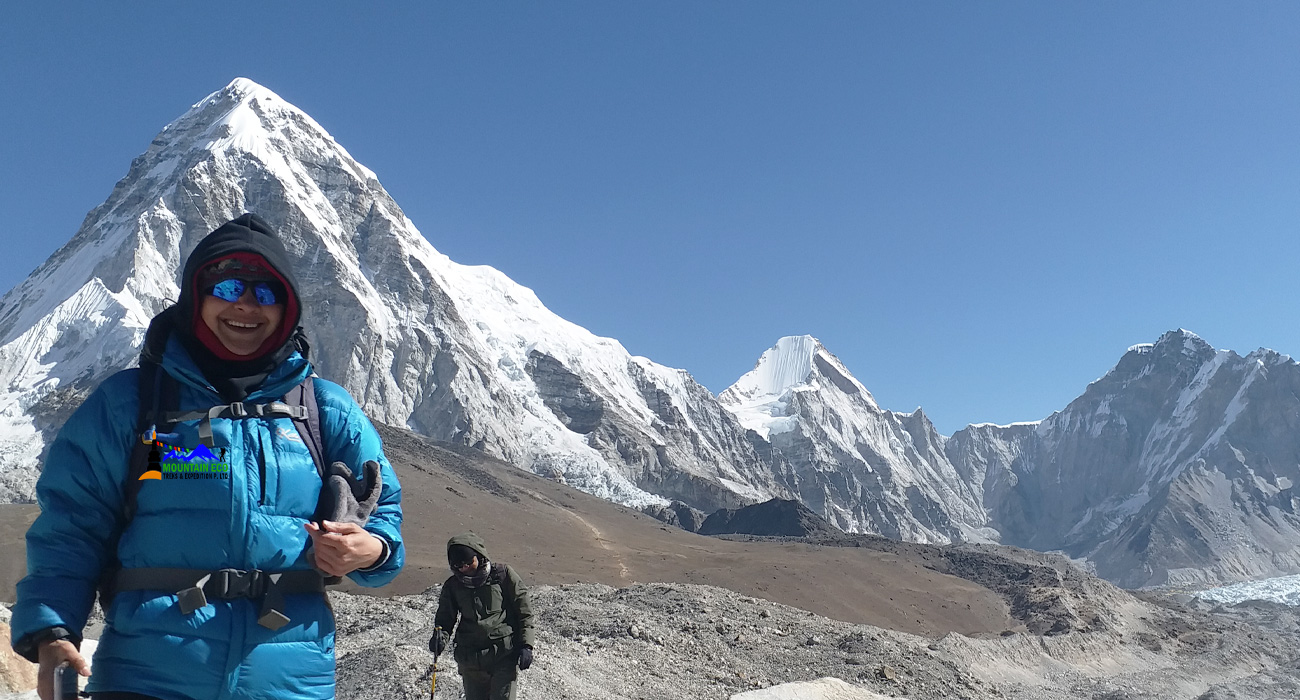
A pre-dawn climb to Kala Patthar (5,545m) - the highest point of the entire trek - rewards you with a sunrise view of Everest (8,848m), Nuptse, Lhotse, and Changtse before a long descent to Pheriche (4,371m). The sky shifts from grey to gold to deep orange as the giants glow above you in a way no photograph ever quite captures. The descent of over 1,100m feels like a reward your lungs have been waiting for.r onward flight. Safe travels - and well done. Not everyone makes it to Everest B
A long descent back through the Khumbu Valley, passing Tengboche and Phunki Thanka, returns you to Namche Bazaar (3,440m). The mountains look different going back - bigger somehow, now that you know what is behind them. The air grows noticeably richer with every hour and by the time you walk into Namche the achievement is starting to settle in.
The longest day by distance runs downhill all the way through Monjo, Jorsalle, and Phakding back to Lukla (2,860m). Lower altitude, greener trail, lighter legs. That evening the entire Mountain Eco Treks team - guides, porters, and trekkers - sits down together for a meal that feels genuinely earned.
One last early morning in the mountains, one short flight, and Kathmandu reappears below you. Transfer to your hotel, clean up, and let it all settle in. The city is the same as you left it - you are not.
Flight Note: Return flight from Lukla operates direct to Kathmandu or via Manthali (Ramechhap), depending on season. Peak season (March-May, September-November) routes via Manthali with a 4-5 hour road transfer. Mountain Eco Treks will confirm your return route in advance.
Mountain Eco Treks arranges your transfer to Tribhuvan International Airport for your onward flight. Safe travels - and well done. Not everyone makes it to Everest Base Camp. You did.
Note: Due to the unpredictable weather at Lukla, flights can sometimes be delayed or cancelled. We recommend having a couple of spare days in case of flight delays. This buffer will help ensure you don't miss your international flight and gives you a chance to relax or enjoy additional activities in Kathmandu.
Service Types
Compare the available package types and choose the service level that matches your comfort, budget, and support needs.
Luxury Package Cost
US$ 3599 per person
Standard Package Cost
US$ 1595 per person
Budget Package Cost
US$ 1285 per person