

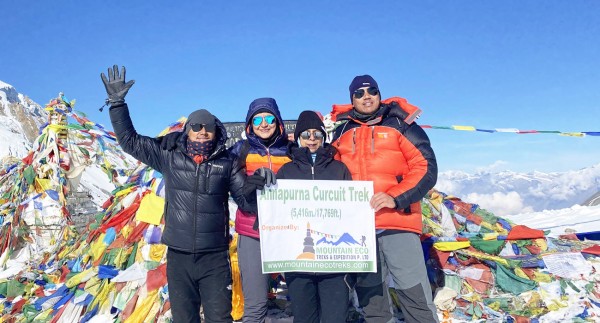
Annapurna Circuit Trek
Starting from
US$1650
US$1650
P/P
The Poon Hill Annapurna Base Camp Trek is not just another Nepal trekking package - it is one of the most complete and rewarding Himalayan adventures you can do without any technical climbing experience. Combining two of Nepal's most loved routes into a single journey, this trek gives you the golden sunrise views of Ghorepani Poon Hill and the raw glacial drama of Annapurna Base Camp - all in one unforgettable trip through the heart of the Annapurna region. Travelers with limited time will be glad to know this is also one of the most popular Annapurna Base Camp Short Trek options available, perfectly designed for those who want the full experience without spending weeks on the trail.
Your journey begins in Pokhara, the gateway to the Annapurna Conservation Area, before the trail winds through terraced hillsides, dense rhododendron forests, and the living Gurung and Magar villages of Ghandruk, Chhomrong, and Tadapani. Every step of this route carries you deeper into one of the most diverse and visually stunning trekking corridors in all of Asia. For those looking for a shorter adventure, the Poon Hill Ghorepani Short Trek connects beautifully as a standalone route or a natural starting point before heading deeper into the Annapurna Sanctuary.
The first major highlight comes at Poon Hill (3,210m) - where you rise before dawn and watch Dhaulagiri (8,167m), Annapurna I (8,091m), and the sacred Machapuchare (Fishtail Mountain) slowly light up across the horizon. From there, the trail descends into the Modi Khola river valley, crossing long swaying suspension bridges above glacial waters before climbing steadily into the Annapurna Sanctuary.
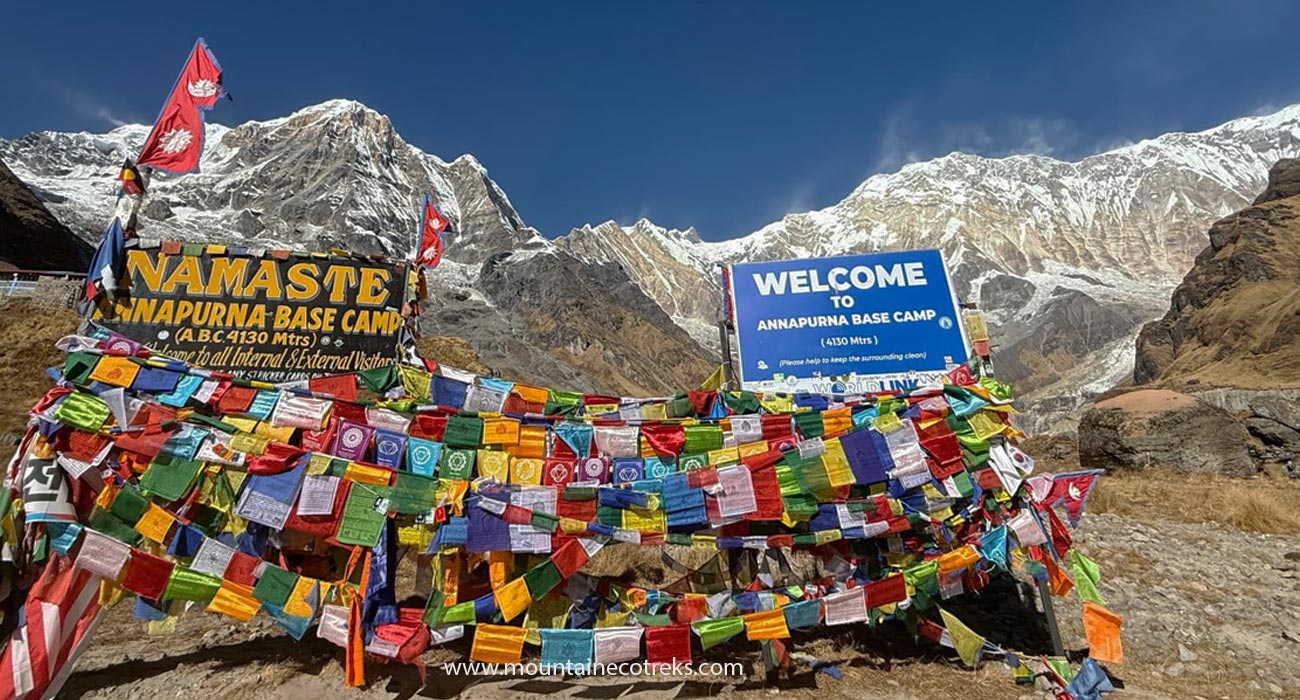
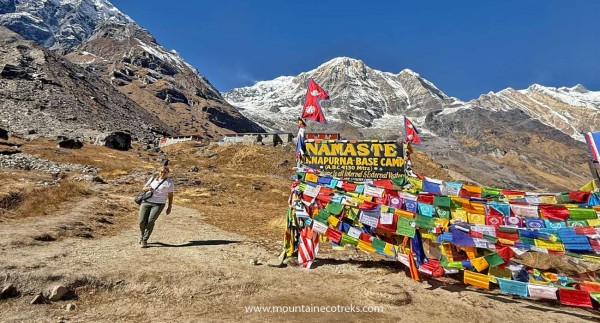
Passing through Machapuchare Base Camp (3,700m), you finally reach Annapurna Base Camp at 4,130m - a natural glacial amphitheater completely encircled by some of the highest peaks on earth. Operated by Mountain Eco Trek, this journey is carefully crafted to give every trekker the perfect balance of adventure, culture, and natural beauty at every stage of the route. Whether you choose the full Annapurna Base Camp Trek or opt for the shorter variation, this trek promises views, culture, and memories that stay with you long after you return home. Rated moderate in difficulty, this trek is ideal for first-time Himalayan trekkers. The best trekking seasons are spring (March - May) and autumn (September - November).
Your adventure begins the moment you land at Tribhuvan International Airport in Kathmandu. Our team will be right there to greet you and take you to your hotel. Take the rest of the day easy - you have a big journey ahead. In the evening, we will sit together for a friendly briefing to walk you through everything you need to know about the trek, your gear, permits, and what to expect on the trail.
This morning you head to Pokhara, the adventure capital of Nepal and your launching point for the Annapurna region. You can choose a relaxed scenic drive through winding hills and river valleys or hop on a quick domestic flight if you prefer. Either way, once you arrive and check in near the shores of Phewa Lake, you will want to take a slow walk along the lakeside, grab a coffee, and soak in those first views of the Annapurna range on the horizon.
After an early breakfast, you hit the road toward Nayapul where your feet take over. The trail winds uphill through villages and terraced fields before diving into beautiful rhododendron and pine forests. It is a steady climb, but every step brings you closer to Ghorepani and those first jaw-dropping views of Machhapuchare, Annapurna South, and Huinchuli. Tonight you rest in a cozy hillside lodge - your first real taste of Himalayan teahouse life.
Set your alarm early - this is the moment most people come here for. The 2 km hike up to Poon Hill in the dark is absolutely worth it when the sky turns golden and the full wall of the Himalayas lights up before you. Dhaulagiri, Annapurna I, Nilgiri, Machhapuchare - all of them right there in front of you. After breakfast back in Ghorepani, you continue through stunning rhododendron forests to the quiet village of Tadapani, where you spend a peaceful night surrounded by the mountains.
Today takes you down into the lush Kimrong Valley and through the small village of Gurjung before climbing up to Chomrong. This is a real Gurung village - the last permanent settlement before the Annapurna Sanctuary - and the people and culture here are wonderfully warm. From the village you get clear views straight up toward Annapurna South and Machhapuchare. A great place to recharge before heading deeper into the mountains.
You drop down to the river this morning, cross a small bridge, and begin climbing again through some of the most beautiful forest on the entire route - thick oak, rhododendron, and pine all around you. After passing through the small settlement of Bamboo, you arrive at Dovan sitting quietly above the Modi River Gorge. The sound of the river at night makes for excellent sleeping.
The trail today feels like it is pulling you into another world. You pass through Himalaya Hotel, walk by the mysterious Hinku Cave, and climb up through Deurali before the forest gives way to wide open alpine terrain. And then suddenly there it is - Machhapuchare Base Camp at 3,700 m, with the iconic fishtail peak towering above you in all its unclimbed glory. The air is crisp, the views are enormous, and the sense of being deep inside the Himalayas is very real.
Just 3 km today, but what a 3 km it is. You walk into the Annapurna Sanctuary - a natural glacial amphitheatre ringed by some of the highest mountains on earth. When you reach Annapurna Base Camp at 4,130 m, you are completely surrounded by Annapurna I (8,091 m), Annapurna South (7,219 m), Gangapurna (7,455 m), and Machhapuchare (6,993 m). Spend the afternoon taking it all in, taking photos, and feeling genuinely proud of how far you have come.
After one last long look at the peaks from base camp, you begin the journey back down. The descending trail feels familiar now but no less beautiful. You pass through Machhapuchare Base Camp and Dovan, with a few short climbs along the way, before settling in for the night back at Bamboo. Your legs are tired but your heart is full.
Today ends with one of the best rewards in all of Nepal trekking. You climb up through Khuldighar and Sinuwa Danda, then drop down to the Chomrong River and continue to Jhinu Danda. Here, natural hot springs sit right beside the river, and after days of trekking there is nothing better than lowering yourself into that warm water and watching the mountains fade into the evening sky.
Your last day on the trail leads you through the villages of Landruk, Tolka, and Deurali, with Annapurna South, Huinchuli, and Machhapuchare keeping you company one final time. You reach Dhampus and jump in a vehicle for the short drive back to Pokhara. Tonight, treat yourself to a good dinner by the lake - you have earned it.
Time to head home. Whether you choose the scenic road through the hills or a quick flight back, Kathmandu welcomes you with its usual energy and colour. Check in to your hotel and spend the evening browsing the streets of Thamel, picking up last-minute souvenirs, or simply sitting back and letting the memories of the past 12 days sink in.
Service Types
Compare the available package types and choose the service level that matches your comfort, budget, and support needs.
Standard Package Cost
US$ 1395 per person
Budget Package Cost
US$ 850 per person
Simply put, it's two incredible treks rolled into one. You walk through rhododendron forests, visit traditional Gurung villages, catch a breathtaking sunrise from Poon Hill at 3,210m, and then continue all the way up to Annapurna Base Camp at 4,130m. It's one of those treks that stays with you long after you're back home.
Most trekkers complete it in 10 to 13 days. That includes travel from Pokhara, rest days on the trail, and a comfortable pace that lets you actually enjoy the journey rather than just rush through it. If you have extra days, use them - this region rewards slow travelers.
Yes, it is. You don't need any mountaineering experience or technical skills. What you do need is a reasonable level of fitness and a willingness to walk 5 to 7 hours a day on hilly terrain. If you can climb stairs without stopping and enjoy long walks, you'll manage this trek just fine with the right preparation.
Spring (March to May) and autumn (September to November) are hands down the best times. The skies are clear, the mountain views are jaw-dropping, and the trail conditions are good. Spring also brings blooming rhododendrons that turn the forest into a sea of red and pink. Winter is doable but cold, and monsoon season is best avoided if you prefer dry trails.
Annapurna Base Camp sits at 4,130 meters and is the highest point of the entire route. Poon Hill at 3,210 meters is where you'll wake up before dawn and watch the first light hit the Himalayas - a moment that honestly feels unreal when you're standing there.
You'll need two permits - the Annapurna Conservation Area Permit (ACAP) and the TIMS Card. Both are easy to arrange in Kathmandu or Pokhara before you head out. Together they cost around USD 40 to 45, which is a small price for access to one of the world's most beautiful mountain regions.
A guided package with Mountain Eco Trek typically falls between USD 850 and USD 1,395 per person, covering your accommodation, meals, permits, and a local guide. If you're trekking on a tighter budget, teahouse-style travel keeps costs lower. Either way, for what you experience, it's genuinely great value.
You're allowed to trek independently in the Annapurna region, and some experienced trekkers do. That said, having a local guide adds a lot - not just for navigation and safety, but for the stories, the cultural knowledge, and the connections along the way. Many trekkers say their guide was one of the highlights of the whole trip.
Teahouse lodges run the length of the route. They're simple, clean, and welcoming - basic twin rooms, hot meals, and sometimes even a hot shower after a long day of walking. Don't expect luxury, but don't expect roughing it either. Most trekkers find the teahouse experience to be a big part of the charm.
Pack smart and pack light. You'll want warm layers, a good down jacket, a waterproof shell, solid trekking boots, trekking poles, a sleeping bag for colder nights, sunscreen, and a basic first-aid kit. Keep your pack under 10 to 12 kg if you can - your knees will thank you on the uphill sections.
It's worth taking seriously, but not worth panicking over. The key is to go slowly, drink plenty of water, and listen to your body. If you feel a persistent headache, nausea, or dizziness at altitude, rest and descend if symptoms don't improve. Most healthy trekkers complete this route without major issues when they pace themselves properly.
More variety than you might expect. Teahouses serve dal bhat (the local staple and genuinely delicious), noodles, soups, fried rice, pasta, and even pancakes and porridge for breakfast. Always stick to filtered or boiled water and carry purification tablets as a backup. Your stomach will thank you.
Yes - with good preparation. Start training at least four to six weeks before your departure. Daily walks, stair climbing, and light cardio will make a real difference on the trail. Choose an itinerary that doesn't rush, and don't be too proud to take rest days when you need them. Thousands of first-time trekkers complete this route every year.
The trek usually starts from Nayapul or Tikhedhunga, both a one to two hour drive from Pokhara by jeep or local bus. To get to Pokhara, you can fly from Kathmandu in about 25 minutes or take a scenic drive of around six to seven hours. Most people spend a night in Pokhara before heading out.
Without a doubt. Few treks in the world give you this much - towering peaks including Annapurna I, Machapuchare, and Dhaulagiri, ancient villages, dense forests, warm local hospitality, and that unforgettable sunrise from Poon Hill. Whether it's your first trek or your tenth, the team at Mountain Eco Trek is here to make sure every step of your journey is taken care of.
The Poon Hill Annapurna Base Camp Trek is not just a walk in the mountains - it is two of Nepal's greatest experiences combined into one journey. You get the most legendary sunrise in the Himalayas, a glacial amphitheater surrounded by fourteen peaks, ancient Gurung and Magar villages, rhododendron forests, hot springs, and suspension bridges - all on a single trail that any reasonably fit person can complete.
The sunrise at Poon Hill at 3,210m is the moment every trekker remembers for life. Dhaulagiri, Annapurna I, and Fishtail Mountain, slowly turning gold in the first light of day, is the kind of view that genuinely changes how you see the world. Then the trail carries you deeper into the Annapurna Sanctuary until you are standing at Base Camp at 4,130m, completely encircled by some of the highest peaks on earth - and the scale of it stops you completely.
No ropes, no crampons, no technical experience needed. For those with limited time, the Short Annapurna Base Camp Trek delivers the same essential experience in fewer days. Operated by Mountain Eco Trek - this is the real Nepal, not just a postcard version of it.
The Poon Hill ABC Trek is one of the most rewarding treks in Asia - and more affordable than most people expect. For a standard 12 to 14-day package, the total cost typically runs between USD 1,075 and USD 1,450 per person. A standalone 4 to 6-day option costs USD 500 to USD 800. Here is where the money goes:
| Item | Estimated Cost |
|---|---|
| ACAP Permit | USD 22 - 25 |
| TIMS Card | NPR 3,000 |
| Licensed Guide | USD 25 - 35 per day |
| Porter | USD 20 - 25 per day |
| Teahouse and Meals | USD 25 - 40 per day |
| Guide and Porter Tips | USD 150 - 200 total |
Beyond the package price, budget an extra USD 400 to USD 600 for daily extras - hot showers, device charging, drinks on the trail, and personal expenses. These small costs add up faster than most people expect. Never skip travel insurance - helicopter evacuations can cost several thousand dollars depending on location and conditions, and that is a lesson nobody wants to learn at altitude. The Poon Hill Ghorepani Short Trek as a standalone option sits at the lower end of the budget scale and is a great entry point for first-time Nepal trekkers.
Timing your trek right makes an enormous difference to the overall experience. Here is an honest breakdown of every season on the trail:
Spring is also the best time to combine your journey with the Mardi Himal Trek - a stunning off-the-beaten-path route in the same Annapurna region that pairs beautifully with a Poon Hill itinerary.
This trail reaches 4,130m - high enough to take altitude seriously but well below the threshold where severe illness becomes a major risk for most trekkers. The important thing to understand is that altitude sickness has nothing to do with fitness. It is caused purely by ascending too fast and giving your body too little time to adjust.
Common symptoms above 2,500m include headache, nausea, fatigue, dizziness, and disturbed sleep. If any of these appear, the response is simple - rest, drink water, and do not go higher. If symptoms worsen, the only right decision is to descend immediately. Never push through serious altitude symptoms hoping they improve with more climbing.
Prevention is straightforward - ascend slowly, drink three to four liters of water daily, avoid alcohol for the first few days at altitude, and consider Diamox after speaking with your doctor before you fly. Your licensed guide monitors everyone in the group daily and knows the evacuation procedures if anything goes wrong. Slower is always smarter at altitude, regardless of how many days you have on the trail.
If you are planning any trek in the Annapurna region in 2026, there is one rule that overrides everything else - solo trekking without a licensed guide is no longer permitted. This applies to every route in the conservation area without exception.
Checkpoints along all major trails actively verify your guide's license and your permits. Being caught without a guide means fines, permit confiscation, or being physically turned back on the trail. The rule was introduced to improve trekker safety and support local communities across the region.
This covers well-known routes and lesser-known trails alike - every trekker in the Annapurna Conservation Area needs a licensed guide in 2026. Booking through Mountain Eco Trek means all of this is handled before you even reach Kathmandu.
Every trekker heading into the Annapurna region needs two permits before hitting the trail. Both are non-negotiable, and both are checked at multiple points along the route:
| Permit | Cost - Foreign | Cost - SAARC | Where to Get |
|---|---|---|---|
| ACAP | NPR 3,000 - USD 22-25 | NPR 1,000 | Kathmandu or Pokhara |
The ACAP covers your entry into the Annapurna Conservation Area. The TIMS card registers you as a trekker in the system for safety tracking. In 2026 only the agency-issued blue TIMS card is valid - the independent green card is no longer accepted on any major route. Children under ten do not require an ACAP permit. The same permits apply whether you are doing the full route or a shorter variation - the conservation area boundaries cover all options. Booking through Mountain Eco Trek includes full permit handling as part of your package - no queuing, no confusion, everything sorted before you start.
Packing for this trek is simpler than most people think. The principle is straightforward - pack light, pack right, and leave anything you think you might need but probably will not. Your porter carries your main bag but your daypack is on your back every single day:
| Category | What to Bring |
|---|---|
| Footwear | Waterproof trekking boots broken in well before departure, wool or synthetic socks |
| Clothing | Thermal base layer, fleece mid layer, down jacket, waterproof shell, warm hat, and gloves |
| Sleeping | Sleeping bag rated to a minimum of- 10 degrees Celsius |
| Lighting | Headlamp with spare batteries - essential for the pre-dawn Poon Hill climb |
| Hydration | Refillable water bottle and purification tablets or filter |
| Sun protection | SPF 50 sunscreen and quality UV sunglasses - UV at altitude is intense |
| Support | Trekking poles - your knees will thank you on every descent |
| Health | Basic first aid kit and altitude medication discussed with your doctor |
Never pack cotton - it holds moisture and becomes dangerously cold at altitude. Everything on this list has earned its place through real experience on the trail.
Choosing between these two routes is one of the most common planning questions and the good news is you do not always have to choose. Here is an honest comparison:
| Poon Hill Short Trek | Annapurna Base Camp Trek | Combined | |
|---|---|---|---|
| Duration | 4 - 6 days | 10 - 12 days | 12 - 16 days |
| Max Altitude | 3,210m | 4,130m | 4,130m |
| Difficulty | Easy to moderate | Moderate | Moderate |
| Best For | Beginners, limited time | Deeper experience | Best of both |
| Cost | USD 500 - 800 | USD 600 - 1,000 | USD 1,075 - 1,450 |
Have 4 to 6 days - Poon Hill gives you the finest sunrise panorama in Nepal and a genuine Himalayan experience without overcommitting. Have 10 to 12 days - Base Camp gives you depth, altitude, and the Annapurna Sanctuary in full. Have 12 to 16 days - do the combined route and get everything in one journey. Mountain Eco Trek recommends the combined route for anyone with the time - because doing half when the full experience is within reach is something most trekkers quietly regret.
Yes - and not just technically safe but genuinely comfortable and enjoyable. This is one of the most welcoming trekking routes in Asia for solo female travelers, and thousands of women complete it every year without incident.
The trail is well-traveled and well-populated throughout the season. Communities along the route have welcomed international trekkers for decades, and the dynamic is warm, respectful, and completely normal. The 2026 mandatory guide rule means a licensed professional is with you at every stage - navigating, monitoring your health, handling logistics, and providing a genuine safety net at altitude. Mountain Eco Trek can arrange female guides on request, and many solo women say it makes the whole experience more relaxed and enjoyable from start to finish.
Standard trekking attire is perfectly appropriate throughout. Solo female trekkers who want a shorter introduction to the region before committing to a longer route often start with a gentler Poon Hill option - a great way to build confidence on a Himalayan trail before going deeper.
This trek is genuinely family-friendly, but the right age and right preparation matter more here than on most other routes. Here is a simple, honest guide:
Teahouses every few hours mean food, drinks, and warm rest stops are never far away. Additional porters carry all equipment, so children only carry their own small daypack. The key signs to watch for above 2,500m are unusual headache, tiredness beyond what the day explains, or loss of appetite - if any of these appear, rest immediately and do not push higher. Families looking for a gentler first Nepal experience with younger children often start with a shorter, lower altitude option before considering a longer route in future seasons. Mountain Eco Trek builds flexible family itineraries with extra buffer days built in, so no child ever feels rushed or pressured on the trail.
Winter trekking from December through February on this route is one of the most underrated experiences in Nepal - raw, quiet, strikingly beautiful, and completely different from the busy autumn and spring seasons. But it requires honest preparation and realistic expectations.
Temperatures drop to minus 10 degrees at Poon Hill before dawn. Overnight at Base Camp it can reach minus 15 or lower. Snow above Machapuchare Base Camp can occasionally make the upper path difficult or briefly impassable after heavy falls. You need serious thermal base layers, a high-quality down jacket, warm gloves and a balaclava, and a sleeping bag rated well below zero. The standard autumn kit will not be enough.
What you get in return is a trail that genuinely feels like it belongs to you. The teahouses are quiet, the skies are often the clearest of the entire year, and the mountain views have a sharp, cold brilliance that spring and autumn rarely match. Winter is also a surprisingly good season for the Mardi Himal Trek - fewer trekkers, dramatic snow-dusted ridgelines, and a raw Himalayan atmosphere that the busy seasons simply cannot replicate. If solitude, silence, and the most dramatic possible Himalayan winter landscape matter more to you than warmth and company, this is absolutely your season.
You May Also Like
US$1650
US$1650
P/P
US$899
US$1050
P/P
US$750
US$900
P/P
US$750
US$999
P/P
US$599
US$699
P/P
US$1395
US$1575
P/P
US$750
US$900
P/P
US$1495
US$1610
P/P
US$1685
US$1895
P/P
Experience the best of Nepal with expert local guides, carefully planned itineraries, and personalized support from enquiry to departure. Tell us what you want to explore and we will help you build the right trip.
Call us: +9779803926665
Enquire on WhatsApp© 2011 - 2026 All rights reserved. Mountain Eco Treks & Expedition





Valentine Riley
Germany
Trek to Annapurna base camp with
1 Feb 2019
Source: Trip Advisor
Date of experience: February 2019
Trip type: Traveled as a couple
Review By: Valentine Riley
Alexandra Aubin
France
Annapurna Base Camp Trek
19 Dec 2022
Source : Trip Advisor
Date of experience:September 2019
Trip type:Traveled with friends
Review By: Alexandra Aubin
Abendsonne07
Finland
Unforgettable trip in the world
1 Sep 2018
In the end of September 2018 we (a group of 3 young women) decided to take the opportunity being in Nepal to do a trip to the Annapurna Basecamp in the heart of the Himalaya.
Well, what shall I say - it became one of the best things i've ever experienced in all my life. Not only that the nature is so stunningly beautiful and the atmosphere in the mountains itself is wonderful - but also that we had Dev as our guide made this week of trekking an immense gift to us. I can only highly recommend Dev! If you want, he explains everything about the Napli culture to you, he is always very polite and ready to help you.
thank you so much Dev for this wonderful week!
Elisa
Source : Trip Advisor
Cardus
United States
Enjoying magnificent ABC
1 Sep 2018
We decided after a recommendation to do our first trekking in the Himalayas with Mountain Eco Treks & Expeditions. Dev was helping us with every kind of question planning therefore we got exactly what we were looking for: a unique experience in the Himalayas during a very nice organized trek.
Moreover, Dev was engaged concerning everything - organizing the lodges, TIMS-card, our well-being, and for moving safely in the Mountain too. His kind and funny character made the Himalayan experience even more pleasant for us - Additionally, our time with Dev allowed us to get to know more about people, culture, rituals, and flora, especially in the Mountain regions. Therefore I can definitely recommend Mountain Eco Treks & Expedition and I am looking forward to my next Trek in Nepal with Dev and his trekking agency.
Source : Trip Advisor
Somalie
United States
Annapurna Base Camp - wonderful!
18 Nov 2018
My friends and I travelled to the Annapurna Base camp (I didn’t quite make it due to the altitude) and we had a wonderful time with Dev, his son and our porter Bijaya! I highly recommend Dev he created a really lovely atmosphere, we felt like we were with family, and we felt very comfortable and safe throughout the trek. Not to mention that during our trek the weather got quite scary as we got closer to ABC to the point where there was a snow storm and 8 people got caught two avalanches. Dev ended up saving these 8 people while also ensuring that we were safe! A very big thanks to Dev and his team!
Source : Trip Advisor
Meander11812032271
Australia
Unforgettable experience!!
28 Sep 2019
Traveling with Dev and his small team was like walking with friends. He is incredibly attentive and generous with his time and effort, and other hikers remarked how family-oriented our group felt. We felt safe the whole way, despite some adverse weather conditions. Sometimes in life, you get very lucky, and with Dev and his team, this was one of those moments. Highly recommended.
Source: Trip Advisor
Paula G
Australia
ABC,Poonhill and Gorepani Trek
1 Nov 2018
Dev Lama was very friendly, serious, competent, and careful guidance. I enjoyed the Trek with him very much. If I will come to Nepal a 7th time I also would take him as a guide. I like him like my grandchild.
Source: Trip Advisor